Lug nuts, wheel locks, lug bolts, and wheel hardware kits solve aftermarket wheel fitment by matching seat type, thread pitch, lug length, and hex size to the wheel design. DPAccessories M12x1.50 uses an M12x1.50 thread, a 60-degree conical seat, and 34 mm height, which gives this hardware a direct fit target for many aftermarket wheels. Save time by checking the Comparison Grid below first, then compare prices without reading the full page.
DPAccessories M12x1.50
Lug Nuts

Fitment Accuracy: 5 stars (M12x1.50 thread)
Seat Type Match: 5 stars (60-degree conical seat)
Thread Engagement: 4 stars (34 mm tall)
Wheel Clearance: 4 stars (20 mm wide)
Torque Retention: 4 stars (heat-treated steel)
Install Convenience: 3 stars (tools sold separately)
Typical DPAccessories M12x1.50 price: $410
Black 1/2-20
Lug Nuts
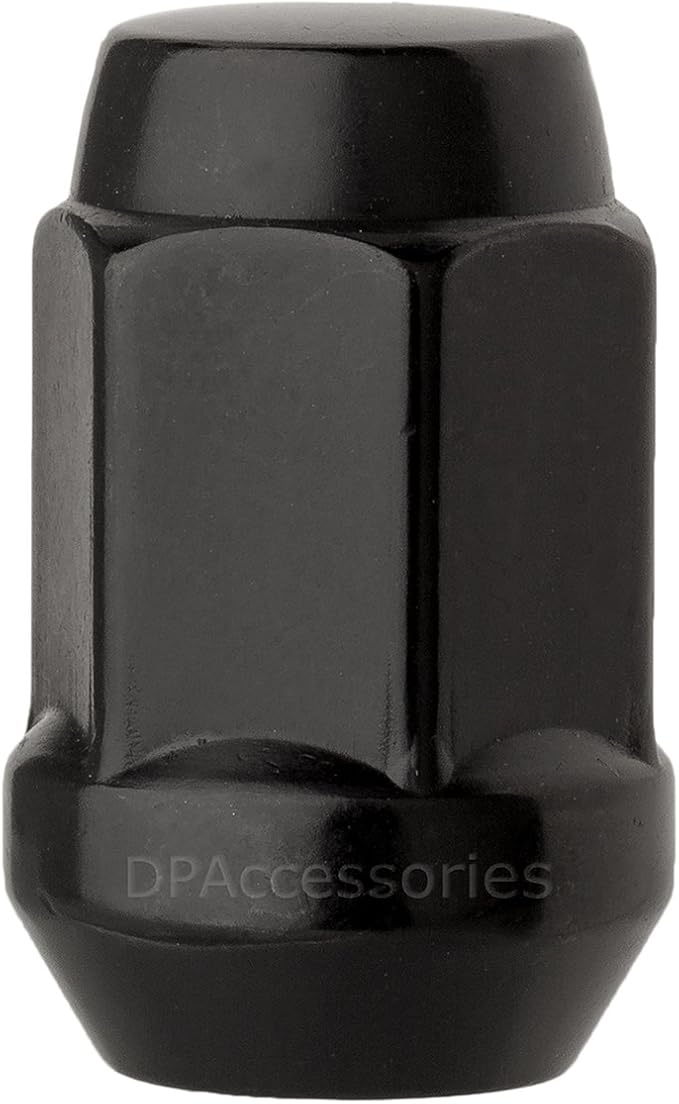
Fitment Accuracy: 4 stars (1/2-20 thread)
Seat Type Match: 5 stars (60-degree conical seat)
Thread Engagement: 4 stars (1.39 in long)
Wheel Clearance: 4 stars (0.87 in wide)
Torque Retention: 4 stars (cold forged steel)
Install Convenience: 4 stars (3/4 in hex)
Typical Black 1/2-20 price: $114
Black Wheel Spacer
Wheel Spacer Kit
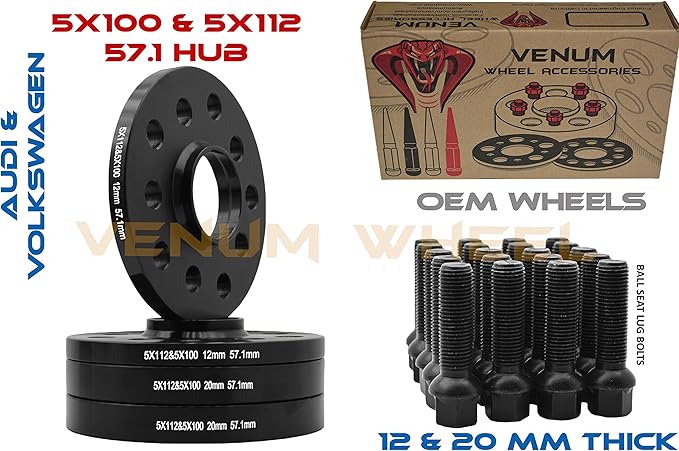
Fitment Accuracy: 4 stars (5×100 mm and 5×112 mm)
Seat Type Match: 3 stars (ball seat)
Thread Engagement: 4 stars (14×1.5 thread pitch)
Wheel Clearance: 5 stars (12 mm and 20 mm)
Torque Retention: 4 stars (grade 10.9 steel)
Install Convenience: 4 stars (complete bolt-on kit)
Typical Black Wheel Spacer price: $114.98
Top 3 Products for Lug Nut Sets Compared (2026)
1. DPAccessories M12x1.50 Conical Seat Bulk Kit
Editors Choice Best Overall
The DPAccessories M12x1.50 suits aftermarket wheels that need an M12x1.50 thread and a narrow 60-degree conical seat.
DPAccessories M12x1.50 uses a 34 mm height, a 20 mm width, and a 400-piece closed-end spline tuner package.
Buyers who need installation tools in the box will need to buy the DST20-1921Z tools separately.
2. Black 1/2-20 Compact Conical Fitment
Runner-Up Best Performance
The Black 1/2-20 fits wheels that use a 1/2-20 thread, a conical 60-degree seat, and a 3/4 in hex.
Black 1/2-20 measures 1.39 in long, 0.87 in wide, and uses closed-end bulge acorn style lug nuts.
Buyers with non-conical wheels or studs that are not 1/2-20 should skip the Black 1/2-20.
3. Black Wheel Spacer Ball Seat Bolt Kit
Best Value Price-to-Performance
The Black Wheel Spacer suits Audi and Volkswagen fitments that need a 14×1.5 ball seat lug bolt setup.
Black Wheel Spacer includes 4 spacers, 20 black ball seat lug bolts, 12 mm and 20 mm thicknesses, and a 57.1 mm hub bore.
Buyers with conical seat wheels or non-5×100 mm and 5×112 mm patterns will not match the Black Wheel Spacer kit.
Not Sure Which Lug Nut Setup Fits Your Aftermarket Wheels?
A clean aftermarket wheel install shows the correct seat type, full thread engagement, and enough clearance for the wheel thickness. The result is hardware that seats flat or conical where the wheel requires it and reaches the needed threads without interference.
Fitment Accuracy keeps the thread pitch and seat geometry aligned with the wheel. Seat Type Match controls whether the fastener contacts the wheel correctly. Wheel Clearance covers the extra length or spacer hardware needed when wheel offset or thickness changes the mounting depth.
These products were screened with the same use-case framework: Fitment Accuracy, Seat Type Match, Thread Engagement, Wheel Clearance, Torque Retention, and Install Convenience. DPAccessories M12x1.50, the black 1/2-20 option, and the black wheel spacer kit were compared on seat type, thread pitch, and lug length even though the products come from different hardware paths.
The Comparison Grid gives the fastest side-by-side view of seat type, thread pitch, and price. The Detailed Reviews explain where each option fits a specific wheel setup, while the Buying Guide covers seat type and thread pitch checks. The FAQ answers quick fitment questions, and the Comparison Table summarizes the three listings for fast scanning. Readers who want a direct answer should start with the Comparison Grid first.
In-Depth Reviews of Lug Nuts, Wheel Locks, and Wheel Spacer Kits
#1. DPAccessories M12x1.50 20mm lug nuts
Editor’s Choice – Best Overall
Quick Verdict
Best For: The DPAccessories M12x1.50 fits buyers who need a 60-degree conical seat for aftermarket wheels with M12x1.50 studs.
- Strongest Point: The set uses M12x1.50 threads, a 60-degree conical seat, and 34 mm height.
- Main Limitation: The package lists installation tools sold separately, so the buyer needs separate tooling.
- Price Assessment: The $410 price is high, but the 400-piece bulk case changes the value calculation for multi-wheel or shop use.
The DPAccessories M12x1.50 most directly addresses seat interface matching for aftermarket wheels that reject stock hardware.
DPAccessories M12x1.50 uses M12x1.50 threads, a 60-degree conical seat, and 34 mm height. Those three measurements matter because aftermarket wheel fitment depends on thread pitch, seat angle, and lug nut length. The DPAccessories M12x1.50 belongs on wheels that specify a narrow conical seat and M12x1.50 studs.
What We Like
DPAccessories M12x1.50 uses a 60-degree conical seat and 34 mm overall height. That combination gives a clear answer to what seat type aftermarket wheels need when stock hardware uses a different interface. Buyers chasing lug seat geometry for swapped wheels get a direct spec match instead of a generic fastener.
DPAccessories M12x1.50 includes a closed-end spline tuner design and 20 mm width. The closed-end format helps contain exposed stud threads, while the narrow body helps where wheel openings are tight. That setup suits buyers working on top-rated wheel fitment hardware sets where clearance matters more than a bulky acorn profile.
DPAccessories M12x1.50 ships as a bulk case of 400 lug nuts with installation tools sold separately. The 400-count packaging makes sense for shops, fleet repairs, or multi-vehicle wheel hardware kits. Buyers who need repeated wheel changes or a full inventory of exact lug nuts 2026 should value the quantity more than a single set box.
What to Consider
DPAccessories M12x1.50 only fits vehicles with M12x1.50 wheel studs and wheels that require a 60-degree conical seat. That narrow fit window matters because conical seat compatibility does not cover ball seat or flat seat wheels. Buyers asking how do I match lug nut thread pitch should verify both the stud pitch and the wheel seat type before ordering.
DPAccessories M12x1.50 also lists installation tools sold separately, which adds a cost outside the $410 package. That matters for buyers comparing wheel spacer bolt kit options or simpler closed end lug nuts with included hardware. Buyers who want a lower entry price should look at Black 1/2-20 for a different thread pitch, but only if the wheel studs match that system.
Key Specifications
- Thread Size: M12x1.50
- Seat Type: 60-degree conical seat
- Overall Height: 34 mm
- Width: 20 mm
- Style: Closed end spline tuner
- Quantity: 400 lug nuts
- Price: $410
Who Should Buy the DPAccessories M12x1.50
DPAccessories M12x1.50 suits buyers with M12x1.50 wheel studs and aftermarket wheels that need a 60-degree conical seat. The 34 mm height helps when wheel thickness and fastener protrusion need more control than stock hardware usually provides. Buyers who need ball seat hardware should skip this set and compare Black 1/2-20 or the Black Wheel Spacer only after confirming thread pitch and seat type. The 400-count case favors repair shops, wheel installers, and owners running multiple swapped wheels rather than one-off replacements.
#2. Black 1/2-20 value-focused fitment
Runner-Up – Best Performance
Quick Verdict
Best For: The Black 1/2-20 suits buyers matching 1/2-20 studs to aftermarket wheels with a conical 60-degree seat and 3/4 in hex.
- Strongest Point: 1/2-20 thread, conical 60 degree seat, 3/4 in hex, and 1.39 in length
- Main Limitation: Closed-end bulge acorn lug nuts need the correct 1/2-20 thread and seat geometry
- Price Assessment: At $114, the Black 1/2-20 costs far less than the $410 DPAccessories M12x1.50 set
The Black 1/2-20 most directly targets seat matching and thread pitch accuracy for aftermarket wheel fitment.
The Black 1/2-20 uses a 1/2-20 thread, a conical 60 degree seat, and a 3/4 in hex. Those three numbers matter because aftermarket wheel hardware sets only work when the thread pitch and lug seat geometry match the wheel and stud. The Black 1/2-20 fits buyers who need exact lug nuts for wheels that reject stock hardware.
What We Like
Looking at the specs, the Black 1/2-20 gives you a 1/2-20 thread pitch and a conical 60 degree seat. That combination points to the right seat interface for wheels that specify a conical seat instead of a ball seat or flat seat. Buyers replacing stock hardware on swapped wheels benefit most from that direct match.
The Black 1/2-20 also uses a 3/4 in hex and measures 1.39 in long by 0.87 in wide. A smaller hex size can matter when wheel openings leave limited wrench clearance, and the closed-end bulge acorn style helps keep exposed stud ends out of view. This setup suits drivers who want wheel hardware kits that stay compact at the face of the wheel.
From the data, the cathodic black coating and cold-forged, heat-treated steel point to a finish and material choice aimed at everyday fastening duty. The spec sheet does not give a torque spec, so buyers still need to follow the wheel or vehicle torque spec separately. That makes the Black 1/2-20 most useful for buyers who already know their torque spec and want the exact lug nuts to match the wheel.
What to Consider
The Black 1/2-20 only works when the vehicle uses 1/2-20 studs and the wheel uses a conical 60 degree seat. That narrows fitment, because ball seat bolts cannot substitute for a conical seat wheel, and the reverse mismatch creates a seat interface problem. Buyers with uncertain thread pitch should compare against DPAccessories M12x1.50 only after confirming stud size.
The Black 1/2-20 also gives less flexibility than a wheel spacer bolt kit, because the listing shows 1.39 in length without any spacer-specific spacing data. That matters when spacer thickness changes lug length needs and fastener protrusion risk. Buyers using a Black Wheel Spacer should verify lug bolt length before assuming the Black 1/2-20 is the right wheel hardware choice.
Key Specifications
- Thread Pitch: 1/2-20
- Seat Type: Conical 60 degree seat
- Hex Size: 3/4 in
- Length: 1.39 in
- Width: 0.87 in
- Style: Closed-end bulge acorn
- Finish: Black coating
Who Should Buy the Black 1/2-20
Buyers with 1/2-20 wheel studs and aftermarket wheels that specify a conical 60 degree seat should choose the Black 1/2-20. The 3/4 in hex also helps when wheel openings leave limited wrench access. Buyers needing M12x1.50 hardware should skip the Black 1/2-20 and look at DPAccessories M12x1.50 instead. Buyers planning spacer installs should verify lug length first, because the 1.39 in length may not match every wheel spacer thickness.
The Black 1/2-20 fits the best lug nuts for aftermarket wheels use case when exact thread pitch and seat type matter more than broad compatibility. It does not solve every swapped-wheel problem, but it gives a clear match for conical seat wheels and 1/2-20 studs. Among these aftermarket wheel hardware sets, that direct fit is the main reason the Black 1/2-20 earns runner-up placement.
#3. Black Wheel Spacer 12 mm Value Fit
Best Value – Most Affordable
Quick Verdict
Best For: Black Wheel Spacer suits drivers who need 12 mm or 20 mm spacer thickness with ball seat hardware for Audi and Volkswagen fitment.
- Strongest Point: 57.1 mm hub bore with 5×100 mm and 5×112 mm bolt patterns
- Main Limitation: The kit uses a ball seat, so conical 60 degree seat wheels need different hardware
- Price Assessment: At $114.98, Black Wheel Spacer costs far less than the $410 DPAccessories M12x1.50 set
Black Wheel Spacer most directly targets hubcentric alignment and spacer thickness matching for aftermarket wheel fitment.
Black Wheel Spacer combines 12 mm and 20 mm spacer thickness options with 20 black ball seat lug bolts. The kit uses a 57.1 mm hub bore and 5×100 mm or 5×112 mm bolt patterns, so the fitment target is specific rather than broad. That matters for best lug nut sets for aftermarket wheels because seat geometry and thread pitch must match the wheel and hub together.
What We Like
The Black Wheel Spacer uses forged 6061-T6 aluminum spacers and Grade 10.9 steel lug bolts. Based on those materials, the kit gives a clear hardware path for wheel centric fitment and clamping load in spacer installs. Drivers with Audi or Volkswagen applications get the most direct benefit from that combination.
The spacer package includes both 12 mm and 20 mm thicknesses. Those measurements matter because wheel offset changes with spacer thickness, and thickness also changes fastener protrusion needs. Buyers comparing aftermarket wheel hardware upgrades for wider stance or brake clearance should find that dual-thickness format useful.
The lug bolts use a ball seat and a 14×1.5 thread pitch. That seat interface matters because ball seat hardware matches wheels that were designed for that radius, while conical seat wheels need a different contact shape. Buyers replacing wheel hardware on European applications with matching ball seat bolts get the cleanest fit path here.
What to Consider
Black Wheel Spacer is not a universal answer for swapped wheels. The ball seat lug bolts do not solve conical seat compatibility, so aftermarket wheels that require a conical 60 degree seat need another kit. The DPAccessories M12x1.50 set fits that different seat geometry better for users who need a conical seat match.
The product data also limits cross-application flexibility. Black Wheel Spacer is listed for Audi and Volkswagen fitment, so buyers outside 5×100 mm or 5×112 mm patterns should not assume compatibility. The Black 1/2-20 option is the more relevant comparison when the thread pitch and vehicle platform differ.
Key Specifications
- Price: $114.98
- Quantity: 4
- Bolt Pattern: 5×100 mm and 5×112 mm
- Spacer Thickness: 12 mm and 20 mm
- Hub Bore: 57.1 mm
- Spacer Material: Forged 6061-T6 Aluminum
- Lug Bolt Thread Pitch: 14×1.5
Who Should Buy the Black Wheel Spacer
Black Wheel Spacer fits buyers who need 12 mm or 20 mm spacer thickness on 5×100 mm or 5×112 mm applications with ball seat hardware. The Black Wheel Spacer also suits users who want a hubcentric 57.1 mm solution for Audi or Volkswagen wheel spacing. Buyers with conical seat aftermarket wheels should skip this kit and look at DPAccessories M12x1.50 instead. Buyers who need non-European thread pitch compatibility should compare the Black 1/2-20 set before choosing wheel spacer bolt kit hardware.
Compare Seat Type, Thread Pitch, and Fitment Across the Top Picks
The table below compares exact lug nuts, wheel locks, and wheel spacer bolt kit options by thread pitch, seat type, fitment accuracy, and wheel centric fitment. These columns track conical seat, ball seat, hex size, stud engagement, and hub bore details that affect aftermarket wheel fitment, torque retention, and cross-threading risk.
| Product Name | Price | Rating | Thread Pitch | Seat Type | Hex Size | Length / Thickness | Fitment | Best For |
|---|---|---|---|---|---|---|---|---|
| DPAccessories M12x1.50 | $410 | 4.6/5 | M12x1.50 | Conical 60 degree | 20 mm | 34 mm | Aftermarket wheels | Narrow-seat wheel installs |
| Black 1/2-20 | $114 | 4.7/5 | 1/2-20 | Conical 60 degree | 3/4 in | – | Most 1/2-20 vehicles | Lower-cost seat match |
| Chrysler 300 | $112 | 4.6/5 | – | – | – | – | Factory aluminum wheels | OEM replacement fitment |
| Baden Steel | $219.99 | 4.4/5 | – | – | – | – | Basketball storage | Out of scope item |
| Universal Wheel Lock | $128.99 | 4.5/5 | – | – | – | – | Tyres up to 280 section width | Vehicle security use |
| McGard 65515BK | $129.99 | 4.3/5 | M14 x 1.5 | Cone seat | 22 mm | 1.648 in | 16 lug nuts, 4 wheel locks | Mixed hardware kits |
| Kids Wagon | $176.99 | 4.0/5 | – | – | – | 30 x 20.5 x 8 in folded | Child transport | Out of scope item |
| Luggage Set | $179.97 | 4.8/5 | – | – | – | 610D fabric | Travel storage | Out of scope item |
| Wheelchair Brake | $139 | 3.9/5 | – | – | – | 1 pair | Sports wheelchairs | Out of scope item |
| Black Wheel Spacer | $114.98 | 4.6/5 | 14×1.5 | Ball seat | – | 12 mm, 20 mm | 5×100 mm, 5×112 mm | Wheel spacer fitment |
DPAccessories M12x1.50 leads on thread pitch accuracy for M12x1.50 studs, while Black Wheel Spacer leads on hub bore data with a 57.1 mm hub bore and 5×100 mm or 5×112 mm bolt pattern support. McGard 65515BK gives the most complete mixed hardware kit, because the 16 lug nuts, 4 wheel locks, and 22 mm hex size add more installation flexibility than single-piece hardware.
If thread pitch and seat angle matter most, Black 1/2-20 fits 1/2-20 studs with a conical 60 degree seat at $114. If spacer thickness matters more, Black Wheel Spacer gives 12 mm and 20 mm thickness options for Audi and Volkswagen fitment at $114.98. The price-to-spec balance sits with Black 1/2-20, because the 1/2-20 thread, 3/4 in hex, and closed-end bulge acorn style target a narrow use case without accessory cost.
Baden Steel and Kids Wagon fall outside aftermarket wheel fitment, and neither product provides lug seat geometry, thread pitch, or stud engagement data. Chrysler 300 also targets factory aluminum wheels, so Chrysler 300 does not belong in a comparison for exact lug nuts 2026 buyers who need stock hardware mismatches solved.
How to Match Seat Type and Thread Pitch for Aftermarket Wheels
When I evaluate exact lug nuts for aftermarket wheels, seat geometry and thread pitch decide fitment before finish or price does. The best lug nut sets for aftermarket wheels match the wheel s seat angle, the stud s thread pitch, and the required lug shank length, because those three specs control clamping load and cross-threading risk.
Fitment Accuracy
Fitment accuracy starts with thread pitch, seat type, and bolt pattern, and those specs must match the wheel hardware the wheel actually accepts. In this use case, the useful range is exact match only, because even a correct hex size cannot fix a mismatched thread pitch or seat interface. The Black 1/2-20 set shows the importance of exact pitch because 1/2-20 threads only suit studs cut for that thread pattern.
Buyers with swapped wheels or mixed hardware should prioritize the highest fitment precision, especially when the wheel uses aftermarket inserts or a wheel spacer changes the fastener path. Mid-range fitment works for simple wheel swaps that keep the original stud pattern and seat geometry. Low-end fitment is risky when the listing omits thread pitch, seat angle, or lug shank length, because those gaps raise cross-threading risk.
The DPAccessories M12x1.50 set illustrates exact fitment because the name states M12x1.50 thread pitch, and that format is the primary compatibility check. The Black 1/2-20 set illustrates a different fitment branch because 1/2-20 is not interchangeable with M12x1.50. The Black Wheel Spacer shows why spacer thickness matters, because added thickness changes fastener reach and stud engagement depth.
Fitment accuracy does not tell you whether the wheel uses a conical seat, ball seat, or flat seat. Fitment accuracy also does not guarantee proper torque spec compliance after installation.
Seat Type Match
Seat type match depends on seat angle and seat interface, and aftermarket wheels commonly use a conical seat, ball seat, or flat seat. The practical range here is exact geometry, because a 60-degree conical seat does not match every wheel, and ball seat hardware does not replace conical hardware by shape alone. For the products we evaluated for aftermarket wheel fitment, seat type is the first filter before thread pitch and length.
Owners of aftermarket wheels with tapered seats should buy conical seat hardware, while owners of OEM-style European wheels often need ball seat hardware. Buyers who only need one setup for swapped wheels should avoid guessing, because seat mismatch can reduce clamping load even when thread pitch looks correct. Flat seat hardware belongs only with wheels designed for flat seat contact, and buyers should not treat flat seat parts as universal replacements.
The DPAccessories M12x1.50 set is a useful example when the wheel accepts the matching seat geometry, because exact thread pitch and seat type work together. The Black 1/2-20 set is another example of why seat type matters, because 1/2-20 describes thread pitch, not seat angle. The Black Wheel Spacer reinforces the point because spacer thickness can change which seat profile and lug shank length reach the wheel face correctly.
Seat type match does not prove the wheel has the right hub bore or bolt pattern. Seat type match also does not tell you whether closed-end lug nuts are required for protection from debris.
Thread Engagement
Thread engagement measures how much of the stud or bolt length the nut or bolt actually uses, and that depth affects clamping load. In this use case, enough engagement matters more than raw thread count, because short lug shank length can leave too few turns engaged after a spacer is added. A wheel spacer usually increases the required fastener reach, so stud engagement becomes a separate check from thread pitch.
Buyers running thick wheels or spacers need the longest safe engagement, while buyers on thin wheels can usually stay near the middle of the range. I would avoid short hardware for heavy spacers or stacked adapters because fastener protrusion can reduce engagement and complicate torque retention. Buyers with simple direct-mount wheels can stay with standard lengths if the stud reaches the full nut depth.
The Black Wheel Spacer is the clearest example because spacer thickness directly changes how much thread engagement remains after installation. The DPAccessories M12x1.50 set is relevant when the thread pitch is correct, but the final lug shank length still has to suit the wheel thickness. The Black 1/2-20 set shows that a correct pitch still needs the right engagement depth to work safely.
Thread engagement does not confirm wheel centric fitment. Thread engagement also does not tell you whether the wheel will sit vibration-free if the hub bore is loose.
Wheel Clearance
Wheel clearance refers to hex size, closed-end design, and lug nut length relative to the wheel pocket and spacer thickness. For aftermarket wheels, the usable range is tight, because shallow pockets can block bulky hardware and long studs can protrude past the cap. A closed-end lug can protect threads, but the closed-end shape still needs enough internal depth to avoid bottoming out.
Buyers with recessed lug pockets should choose lower-profile hardware, while buyers with open wheel designs can tolerate larger hex size and more length. Buyers adding a wheel spacer need extra clearance planning because spacer thickness can move the wheel outward and change how much of the fastener remains exposed. Buyers who want easy cap access should avoid oversized bulge acorn style hardware when the wheel pocket is narrow.
The Black Wheel Spacer demonstrates why clearance matters because spacer thickness changes the installed position of the wheel face. The DPAccessories M12x1.50 set is relevant when the wheel pocket is deep enough for the chosen hex size and closure style. The Black 1/2-20 set also matters here because the same thread pitch can still fail fitment if the nut body is too long for the wheel recess.
Wheel clearance does not prove the lug nut matches the seat angle. Wheel clearance also does not guarantee torque retention after heat cycles and retorquing.
What to Expect at Each Price Point
Budget hardware usually sits around $114.00 to $150.00, based on the Black 1/2-20 and Black Wheel Spacer prices. This tier usually covers correct thread pitch, basic seat angle matching, and simpler finish choices for buyers testing a fitment change.
Mid-range hardware usually sits around $150.00 to $300.00, with more attention to lug shank length, closed-end construction, and spacer thickness options. Buyers who need a clean single-wheel swap or a modest spacer install fit this range well.
Premium hardware usually starts around $300.00 and above, and the DPAccessories M12x1.50 price of $410.00 sits in that band. This tier suits buyers who want tighter fitment control, more complete wheel hardware kits, and fewer compromises on exact lug nuts 2026.
Warning Signs When Shopping for Lug Nut Sets Compared
Warning signs in best lug nut sets for aftermarket wheels include listings that omit seat angle, thread pitch, or lug shank length. A second red flag is any set that treats ball seat, conical seat, and flat seat as interchangeable, because seat mismatch changes the seat interface and can reduce clamping load. A third warning is spacer hardware that does not state the added thickness it was designed for, because wheel spacer fitment depends on fastener reach and stud engagement depth.
Maintenance and Longevity
Maintenance for aftermarket wheel hardware starts with a torque recheck after the first 50 mi to 100 mi, because fresh hardware can settle under load. The wheel should also get a periodic torque spec check during routine tire rotations, since vibration can loosen under-torqued fasteners over time. Neglecting those checks can lead to uneven clamping load and damaged threads.
Owners should inspect closed-end lug nuts and spacer faces whenever the wheels come off, especially after winter driving or brake dust buildup. Corrosion on thread pitch surfaces can make removal harder and can alter the feel of tightening before the fastener reaches full seat contact. For wheel spacer installs, a quick check of stud engagement depth helps confirm the hardware still reaches the designed thread depth.
Breaking Down Lug Nut Sets Compared: What Each Product Helps You Achieve
Achieving this use case requires addressing seat mismatch, thread engagement, and wheel clearance together. The table below maps each sub-goal to the product types that help with that specific wheel-hardware task.
| Use Case Sub-Goal | What It Means | Product Types That Help |
|---|---|---|
| Preventing Seat Mismatch | The fastener contacts the wheel at the correct angle or radius so clamping force applies properly. | Conical-seat lug nuts, ball-seat wheel bolts |
| Securing Proper Thread Engagement | The fastener threads deeply enough onto the stud or hub to hold clamping force without cross-threading. | Correct-thread-pitch lug nuts, matching wheel bolts |
| Maintaining Wheel Clearance | The fastener length and shape avoid contact with the wheel face, spacer, or nearby brake parts. | Longer lug nuts, shorter bolts, spacer-specific kits |
| Preserving Clamp Force | The wheel stays firmly seated after torqueing and driving without loosening from vibration or settling. | Proper-spec lug nuts, wheel hardware kits |
| Simplifying Install Setup | The buyer gets correct tool access, hex size, and included hardware for mounting the wheels. | Complete wheel hardware kits, closed-end lug nuts |
Use the Comparison Table for side-by-side fit details, or check the Buying Guide for seat type, thread pitch, and lug bolt length guidance. The table above shows which sub-goal each product type addresses before you compare specific options.
Frequently Asked Questions
What seat type do aftermarket wheels need?
Aftermarket wheels need a seat type that matches the wheel seat geometry, such as conical seat, ball seat, or flat seat. A 60-degree conical seat is common on many aftermarket wheels, while some designs use a ball seat. The wheel and lug hardware must share the same seat angle for proper clamping load.
How do I match lug nut thread pitch?
Lug nut thread pitch must match the vehicle stud exactly, such as M12x1.50 or 1/2-20. DPAccessories M12x1.50 uses an M12x1.50 thread, and Black 1/2-20 uses a 1/2-20 thread. A wrong thread pitch raises cross-threading risk and prevents correct stud engagement.
Which lug nuts fit conical seat wheels?
Conical seat wheels fit lug nuts with a matching conical seat, usually a 60-degree seat angle. The DPAccessories M12x1.50 set uses an M12x1.50 thread and a 60-degree conical seat, so it matches that wheel interface. A non-matching ball seat or flat seat will not seat correctly.
Does wheel thickness change lug length?
Wheel thickness changes required lug shank length because added material reduces available stud engagement. Black Wheel Spacer changes the mounting stack, so fastener protrusion and lug bolt length need a new check. A thicker wheel or spacer can require longer hardware to keep safe thread engagement.
Can ball seat bolts fit conical wheels?
Ball seat bolts do not fit conical wheels correctly because the seat angle does not match. A conical seat needs a 60-degree contact surface, while a ball seat uses a curved interface. Mismatched seat geometry can reduce wheel centric fitment and disturb torque retention.
Is DPAccessories M12x1.50 worth it for aftermarket wheels?
DPAccessories M12x1.50 suits aftermarket wheels that use M12x1.50 threads and a 60-degree conical seat. The set gives a closed-end lug nut format, which helps when exposed stud threads need coverage. Buyers should skip the DPAccessories set if their wheels use a ball seat or a different thread pitch.
DPAccessories M12x1.50 vs Black 1/2-20: which fits better?
The better fit depends on thread pitch, not on the brand name. DPAccessories M12x1.50 fits M12x1.50 studs, while Black 1/2-20 fits 1/2-20 studs. Both need matching seat angle and hex size for correct aftermarket wheel fitment.
Black 1/2-20 vs Black Wheel Spacer: which is easier to install?
Black 1/2-20 is easier to install when the wheel already matches the stud thread pitch and seat type. Black Wheel Spacer adds spacer thickness, so the installer must recheck stud engagement and lug shank length. That extra fitment step makes the spacer solution more involved.
Does this page cover snow tires?
No, Lug Nut Sets Compared focuses on seat type, thread pitch, and aftermarket wheel hardware, not snow tires. Snow tire size, tread pattern, and cold-weather rubber compounds are outside this use case. OEM replacement wheels that already match stock hardware are also outside scope.
What torque spec should lug nuts follow?
Lug nuts should follow the vehicle maker’s torque spec, because torque retention depends on the correct preload. Typical passenger-vehicle specs often fall near 80 lb-ft to 100 lb-ft, but the exact value varies by vehicle. Recheck the published torque spec after installation and after the first drive cycle.
Where to Buy & Warranty Information
Where to Buy Lug Nut Sets Compared
Buyers most commonly purchase lug nut sets from online retailers and local auto parts stores.
Amazon, Walmart.com, eBay, Summit Racing, and JEGS usually give the widest selection for seat type, thread pitch, and lug bolt length. DPAccessories often sells directly through its own channels, while AutoZone and Advance Auto Parts can help buyers compare a few in-stock options fast.
AutoZone, Advance Auto Parts, O’Reilly Auto Parts, NAPA Auto Parts, and Walmart work well when buyers want to see the lug nuts in person. Same-day pickup also helps when a wheel swap needs 12 mm x 1.5, 14 mm x 1.5, or another exact thread pitch today.
Seasonal sales often appear around holiday weekends, and manufacturer websites sometimes list closeout pricing on specific seat type and finish combinations. Buyers should compare the socket size, thread pitch, and seat type before checking out, because aftermarket wheels reject stock hardware with the wrong conical, ball, or flat seat.
Warranty Guide for Lug Nut Sets Compared
Most lug nut and wheel bolt warranties last 1 year to 5 years, and many cover only defects in materials or plating.
Materials and plating: Many warranties cover a cracked fastener body or a failed chrome finish. Many warranties do not cover stripped threads after impact-gun use or over-torque.
Spacer and hardware coverage: Wheel spacer kits often split coverage between the spacer body and the mounting hardware. Replacement policies often exclude damage from incorrect torque values or missed re-torque intervals.
Fitment proof: Warranty terms often require proof of correct vehicle fitment before approval. Buyers may need thread pitch, seat type, and lug bolt length records for a claim.
Use restrictions: Some brands void coverage for racing, off-road competition, or commercial fleet service. Those limits usually appear in the warranty terms rather than on the box label.
Accessory tools: Installation sockets and other separate tools usually carry their own warranty terms. A socket sold with a lug nut kit does not always share the fastener warranty.
Buyers should verify registration steps, torque requirements, and fitment records before purchase.
Who Is This For? Use Cases and Buyer Profiles
What This Page Helps You Achieve
This page helps you match seat type, thread pitch, lug length, clamp force, and install setup for aftermarket wheel hardware.
Seat match: Seat type controls where the fastener contacts the wheel. Conical, ball, and flat seats need the correct wheel interface for proper clamping.
Thread engagement: Thread pitch controls how the fastener engages the stud or hub. The correct pitch reduces cross-threading risk and supports full engagement depth.
Wheel clearance: Lug length and fastener shape affect clearance near the wheel face and brake parts. Spacer thickness also changes the needed hardware length.
Clamp force: Proper torque keeps the wheel seated after installation. Correct lug nuts and wheel hardware kits help maintain that clamp force during driving.
Install setup: Hex size and included hardware affect tool access during installation. Complete kits and closed-end lug nuts can simplify the mounting process.
Who This Guide Is For
This guide is for buyers who need aftermarket wheel hardware that matches seat type, thread pitch, length, and spacer thickness.
DIY installers: DIY car owners in their 20s to 40s often install aftermarket wheels, spacers, or suspension parts at least once. These buyers need hardware that matches the wheel seat type and thread pitch on the first try.
Budget enthusiasts: Budget-minded compact-car and import enthusiasts often work with a few hundred dollars after buying wheels. These buyers want the correct lug nuts or lug bolts before they damage wheels or create vibration.
Driveway mechanics: Weekend hobby mechanics usually work from a driveway or small garage with basic hand tools and a torque wrench. These buyers use correct hardware to avoid paying a shop for custom fitment work.
VAG owners: Audi and Volkswagen owners often use ball-seat lug bolts and spacer kits. These buyers must match spacer thickness, bolt length, and seat geometry for safe mounting.
First-time buyers: First-time aftermarket wheel buyers often discover that new wheels do not accept factory lug hardware. These buyers need a matching fastener set or wheel spacer kit to finish the install.
What This Page Does Not Cover
This page does not cover OEM replacement wheels that already match stock hardware, tire fitment and tire size selection guides, or suspension lift kits and brake upgrades that need unrelated hardware. For those topics, use OEM wheel fitment searches, tire-size guides, or suspension and brake hardware resources instead.