Rust converters, epoxy primers, self-etching primers, primer surfacers, and rust inhibitors solve first-step restoration by stopping oxidation, building bare metal adhesion, and preserving topcoat compatibility on classic-car steel. Rust-Oleum 249322 supports that first-step decision with a 10-minute dry-to-touch spec and a 30-minute topcoat window for faster sequencing on prepared metal. Save time by checking the Comparison Grid below first, so you can skip the full read and check prices instantly.
Rust-Oleum 249322 Self Etching Primer
Self-Etching Primer
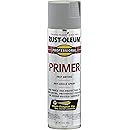
Rust Blocking Power: ★★★★ (Stops Rust formula)
Bare Metal Adhesion: ★★★★★ (Bare metal, aluminum, fiberglass)
Topcoat Compatibility: ★★★★★ (Topcoatable in 30 minutes)
Surface Prep Tolerance: ★★★★ (10 minutes to touch)
Long-Term Encapsulation: ★★★ (12 sq ft coverage)
Typical Rust-Oleum 249322 price: $19.94
RUST BULLET Rust Encapsulator
Rust Encapsulator
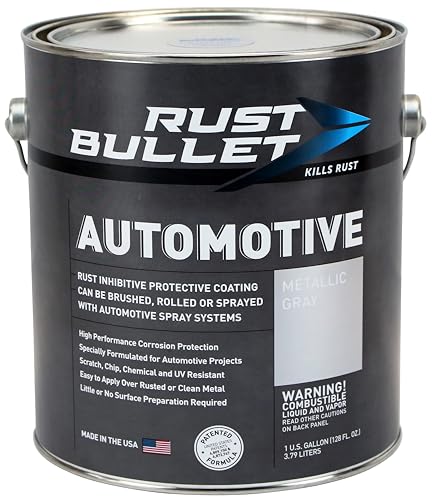
Rust Blocking Power: ★★★★★ (Permanently stops rust)
Bare Metal Adhesion: ★★★★ (Direct-to-metal formula)
Topcoat Compatibility: ★★★ (No primer required)
Surface Prep Tolerance: ★★★★ (Rusted or clean metal)
Long-Term Encapsulation: ★★★★★ (Rock-hard protective barrier)
Typical RUST BULLET price: $189.99
FERTAN 22820 Rust Converter
Rust Converter
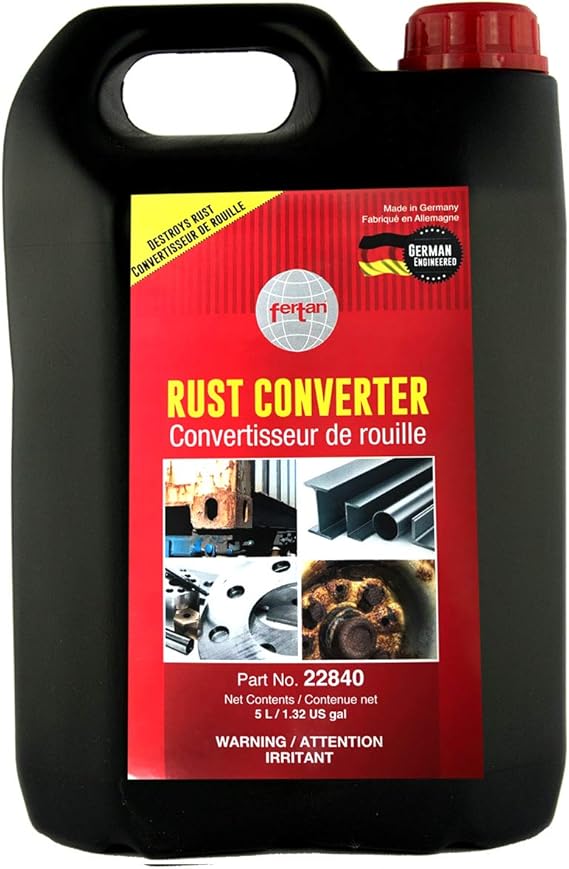
Rust Blocking Power: ★★★★ (Inert dust conversion)
Bare Metal Adhesion: ★★★ (Black zinc phosphate coating)
Topcoat Compatibility: ★★★ (6 months bare-metal protection)
Surface Prep Tolerance: ★★★★★ (No deep scrubbing)
Long-Term Encapsulation: ★★★★ (6 months protection)
Typical FERTAN 22820 price: $156.98
Top 3 Products for Rust Converters and Primers Compared (2026)
1. Rust-Oleum 249322 Fast Bare-Metal Primer
Editors Choice Best Overall
Rust-Oleum 249322 suits classic car panels that need bare metal adhesion and a fast topcoat window.
Rust-Oleum 249322 covers up to 12 sq ft, dries to the touch in 10 minutes, and accepts topcoat in 30 minutes.
Buyers who need long rust encapsulation durability should note that Rust-Oleum 249322 is a self-etching primer, not a rust converter.
2. RUST BULLET Direct-to-Metal Barrier
Runner-Up Best Performance
RUST BULLET fits restorers who want direct-to-metal adhesion on rusted or clean panels without a separate primer first.
RUST BULLET uses a direct-to-metal formula and applies to rusted or clean metal, with a rock-hard automotive-grade finish.
Buyers who need a short recoat window or conventional primer sequencing should note that RUST BULLET is designed as a standalone barrier coat.
3. FERTAN 22820 Rust Conversion Prep
Best Value Price-to-Performance
FERTAN 22820 suits panels with surface corrosion when the goal is rust conversion before later coating steps.
FERTAN 22820 converts corrosion to inert dust, leaves a black zinc phosphate coating, and protects bare metal for up to 6 months.
Buyers needing immediate paint compatibility should note that FERTAN 22820 is a prep step, not a finished primer layer.
Not Sure Which Rust Treatment Fits Your Restoration First?
A classic-car restorer wants a stable, paintable base layer on bare steel, with no fresh rust showing through the next 30-minute to 24-hour sequencing window. The goal also includes clean downstream paint compatibility and enough rust encapsulation durability to keep the panel ready for the next coat.
Rust blocking power supports panels that still hold active corrosion, while bare metal adhesion supports clean steel that needs direct-to-metal attachment. Topcoat compatibility keeps the recoat window predictable, and surface prep tolerance helps when the panel cannot be taken to perfect shop-floor cleanliness.
The same evaluation framework measured Rust Blocking Power, Bare Metal Adhesion, Topcoat Compatibility, Surface Prep Tolerance, and Long-Term Encapsulation across all three options. RUST BULLET, Rust-Oleum 249322, and FERTAN 22820 were directly comparable on rust control and recoat window behavior even though the products come from different coating types. Rust-Oleum 249322, RUST BULLET, and FERTAN 22820 stayed in the shortlist because each meets a different first-step need within the same restoration sequence.
The Comparison Grid gives the fastest side-by-side read, while the Detailed Reviews explain fit for bare metal prep and rust conversion chemistry. The Comparison Table helps with price and spec checks, the Buying Guide covers sequencing choices, and the FAQ answers common topcoat compatibility questions. Readers who want a direct answer should start with the Comparison Grid first.
Detailed Reviews: Rust Conversion, Priming, and Topcoat Compatibility
#1. Rust-Oleum 249322 2-in-1 primer value
Editor’s Choice – Best Overall
Quick Verdict
Best For: Classic car owners who need a 1-step bare metal primer on small repair panels with a fast topcoat window.
- Strongest Point: Covers up to 12 sq ft and can be topcoated in 30 minutes.
- Main Limitation: Rust-Oleum 249322 is a spray primer, so larger restoration jobs need repeated coverage passes.
- Price Assessment: At $19.94, Rust-Oleum 249322 costs far less than Rust Bullet at $189.99 and FERTAN 22820 at $156.98.
Rust-Oleum 249322 most directly supports bare steel adhesion and fast topcoat compatibility on small classic-car repair areas.
Rust-Oleum 249322 is a self etching primer that covers up to 12 sq ft and can be topcoated in 30 minutes. That 30-minute topcoat window matters when a bare metal repair needs paint system sequencing without a long wait. Rust-Oleum 249322 also uses a Stops Rust formula, which gives the primer a corrosion-focused role before color coats go on. For rust converters and primers in 2026, that makes Rust-Oleum 249322 a straightforward first-step choice for clean metal panels.
What We Like
Rust-Oleum 249322 gives you a self etching primer for bare metal, aluminum, and fiberglass surfaces. Based on that surface list, the product fits the common classic-car step where a sanded panel needs an etch profile before filler or color. That makes Rust-Oleum 249322 a good fit for small repair panels, brackets, and fresh sheet metal.
The primer dries to the touch in 10 minutes and reaches a topcoat window in 30 minutes. Based on those numbers, the primer supports faster sequencing than slower rust encapsulation products that usually stay in the prep stage longer. That timing helps when the goal is to move from bare steel to paint without losing a workday.
Rust-Oleum 249322 covers up to 12 sq ft per can and uses an oil based Stops Rust formula. The coverage figure suits localized corrosion protection on patch panels rather than full-body coverage, and the formula gives the product a clear role as an adhesion promoter before finish coats. Buyers restoring a single fender edge or lower-door repair panel get the most direct value here.
What to Consider
Rust-Oleum 249322 does not have the rust conversion chemistry of a dedicated rust converter like FERTAN 22820. Based on the product data, Rust-Oleum 249322 belongs on bare metal, aluminum, or fiberglass rather than heavily oxidized rusted substrate. That means buyers asking whether a converter can replace primer should separate rust stabilization from bare steel adhesion.
The 12 sq ft coverage also limits Rust-Oleum 249322 on larger bodywork sections. Rust Bullet may suit buyers who want a different rust encapsulator approach on more corrosion-prone areas, while FERTAN 22820 makes more sense when rust treatment comes first. For the best rust converter for classic car panels, Rust-Oleum 249322 is not that answer by itself.
Key Specifications
- Product Name: Rust-Oleum 249322
- Price: $19.94
- Rating: 4.8 / 5
- Coverage: 12 sq ft
- Dry-to-Touch Time: 10 minutes
- Topcoat Window: 30 minutes
- Surface Compatibility: Bare metal, aluminum, fiberglass
Who Should Buy the Rust-Oleum 249322
Rust-Oleum 249322 suits a classic car restorer who needs a fast etch primer for a 12 sq ft repair area on bare steel or aluminum. Rust-Oleum 249322 works well when the next step is paint and the topcoat window needs to open in 30 minutes. Buyers who need rust conversion on scaled panels should choose FERTAN 22820 instead, because a converter handles oxidation before primer. Buyers comparing Rust Bullet vs FERTAN 22820 should favor Rust Bullet only if a rust encapsulator fits the repair plan better than a primer-first workflow.
Rust converters and primers compared against each other often answer a sequencing question, and Rust-Oleum 249322 answers it from the primer side. Can you paint directly over a rust converter? Based on this data, Rust-Oleum 249322 is not the converter; the product is the coat that follows clean metal prep. Is Rust Bullet worth it for classic car restoration? That depends on whether the job needs rust encapsulation durability instead of a 30-minute primer route.
Restorers should skip Rust-Oleum 249322 when the panel still carries active rust that needs chemical stabilization first. The product also suits smaller jobs better than full-panel restoration work, because 12 sq ft coverage limits how far one can of primer goes. For best primer for bare metal car restoration, Rust-Oleum 249322 is the clearest fit among these products when speed, cost, and clean metal compatibility matter most.
#2. RUST BULLET 4.6/5 Protection
Runner-Up – Best Performance
Quick Verdict
Best For: RUST BULLET fits classic car owners sealing 1 rusted or clean metal panel before a protective topcoat.
- Strongest Point: Direct-to-metal application with no primer required
- Main Limitation: The available data does not state a flash time or recoat window
- Price Assessment: At $189.99, RUST BULLET costs far more than Rust-Oleum 249322 at $19.94
RUST BULLET most directly addresses rust encapsulation durability for bare metal classic car panels before paint system sequencing.
RUST BULLET costs $189.99 and uses a direct-to-metal formula for rusted or clean metal. That matters for classic car restoration because the first step can stay simpler on panels that still have solid sheet metal. RUST BULLET sits in the rust converters and primers in 2026 discussion as a higher-cost coating for buyers who want one product handling bare steel and light rust.
What We Like
RUST BULLET offers direct-to-metal adhesion with no primer required. The spec sheet says the coating applies directly to rusted or clean metal, which supports simpler surface prep on panels that are not ready for a full epoxy primer system. That fits buyers working on doors, hoods, or quarter panels with light oxidation and sound metal.
RUST BULLET lists a tough automotive-grade finish that resists chips, scratches, and extreme weather conditions. The same product data also says the finish resists UV, oil, and fuel spills, which is relevant when a repaired panel may see road grime and chemical exposure. This makes RUST BULLET a practical option for automotive corrosion protection where the restorer wants rust stabilization before topcoat adhesion.
RUST BULLET can be brushed, rolled, or sprayed. That application flexibility helps when a restorer is matching the coating method to panel shape, workspace, or repair size. Based on the product data, the coating suits users who want an encapsulator approach without adding a separate adhesion promoter.
What to Consider
RUST BULLET does not provide a stated flash time or recoat window in the available data. That makes paint system sequencing harder to plan than with products that publish a clear topcoat window. Buyers comparing rust converters and primers may prefer Rust-Oleum 249322 when timing matters more than coating durability.
RUST BULLET also costs $189.99, which places it far above Rust-Oleum 249322 at $19.94. That price gap matters if the job involves multiple panels, because material cost can move quickly on a classic car shell. Buyers focused on a lower-cost epoxy primer alternative for rusted sheet metal should look closely at FERTAN 22820 before choosing RUST BULLET.
Key Specifications
- Price: $189.99
- Rating: 4.6/5
- Application Method: Brush
- Application Method: Roll
- Application Method: Spray
- Metal Compatibility: Rusted or clean metal
- Primer Requirement: No primer required
Who Should Buy the RUST BULLET
RUST BULLET suits a classic car restorer who needs direct-to-metal coverage on 1 to 3 repair panels with mixed rust and bare steel. The coating works well when the goal is rust encapsulation before a later topcoat and the user wants brush, roll, or spray application. Buyers who need a published recoat window should choose Rust-Oleum 249322 instead. Buyers seeking lower material cost for larger panel counts should compare FERTAN 22820 against RUST BULLET.
#3. FERTAN 22820 rust treatment for bare metal
Best Value – Most Affordable
Quick Verdict
Best For: Classic car owners treating lightly rusted sheet metal before a later primer step on panels up to 6 months away from topcoat.
- Strongest Point: FERTAN 22820 leaves a black zinc phosphate coating and protects bare metal for up to 6 months.
- Main Limitation: FERTAN 22820 does not replace an epoxy primer for final paint sequencing.
- Price Assessment: At $156.98, FERTAN 22820 costs far more than Rust-Oleum 249322 at $19.94.
FERTAN 22820 most directly addresses rust stabilization before primer sequencing on bare steel and lightly rusted panels.
FERTAN 22820 converts metal corrosion to inert dust and leaves a black zinc phosphate coating. That matters because the product supports rust stabilization before later surface prep, and the coating protects bare metal for up to 6 months. FERTAN 22820 fits restoration work where the panel cannot move directly to paint the same day.
What We Like
FERTAN 22820 gives you a conversion coating and a phosphate layer in one treatment. Based on the listed chemistry, that combination helps separate active oxidation from the paint system sequencing that follows. The product suits restorers who need a controlled first step on bare steel.
FERTAN 22820 protects bare metal for up to 6 months, which is a clear timing advantage for stalled projects. That window matters when a project needs rust stabilization before a proper primer or filler stage. The product fits a garage build that pauses between metal treatment and final coating.
FERTAN 22820 eliminates the need for deep scrubbing or sandblasting, according to the product data. That saves aggressive surface prep on panels where heavy blasting could remove more material than needed. The product makes sense for owners working with intact but rusted substrate rather than perforated panels.
What To Consider
FERTAN 22820 is not a final paint-ready primer, so the first step still needs a follow-up coating. Based on the description, the product handles rust conversion chemistry, but the panel still needs a compatible primer for topcoat adhesion. Buyers asking which primer is best for topcoat compatibility should look at Rust-Oleum 249322 instead.
FERTAN 22820 also sits at $156.98, which is a high entry cost for a single-treatment rust converter. That price makes sense only when the 6-month bare metal protection and zinc phosphate coating solve a real scheduling problem. Buyers seeking a cheaper first step for small repair panels may prefer Rust-Oleum 249322.
Key Specifications
- Product Name: FERTAN 22820
- Price: $156.98
- Rating: 4.8 / 5
- Corrosion Conversion: Converts metal corrosion to detached inert dust
- Surface Coating: Black zinc phosphate coating
- Bare Metal Protection: Up to 6 months
- Preparation Requirement: No deep scrubbing or sandblasting
Who Should Buy the FERTAN 22820
FERTAN 22820 suits restorers treating lightly rusted panels that need up to 6 months of rust stabilization before primer work. The product works well when the project needs corrosion conversion on bare steel without deep scrubbing or sandblasting. Buyers who want a final primer for immediate topcoat should choose Rust-Oleum 249322 instead. Buyers who want a higher-priced rust encapsulator with a different chemistry should compare Rust Bullet against FERTAN 22820 before buying.
For the products we evaluated for classic car metal prep, FERTAN 22820 answers the scheduling problem better than a final primer, but not better than an epoxy step. The product does not replace a full primer system for bare steel adhesion. That makes FERTAN 22820 a strong value choice only when the first-step goal is rust conversion, not finish readiness.
Rust Converter vs Primer Comparison: Adhesion, Durability, and Sequencing
The table below compares rust converters and primers in classic car restoration using rust blocking power, bare metal adhesion, topcoat compatibility, surface prep tolerance, and long-term encapsulation. Those columns match the first-step sequencing decision for bare steel, clean metal, and rusted substrate work in rust converters and primers 2026.
| Product Name | Price | Rating | Rust Blocking Power | Bare Metal Adhesion | Topcoat Compatibility | Surface Prep Tolerance | Long-Term Encapsulation | Best For |
|---|---|---|---|---|---|---|---|---|
| FERTAN 22820 | $156.98 | 4.8/5 | Converts metal corrosion to inert dust | Leaves a black zinc phosphate coating | Protects bare metal for up to 6 months | Eliminates deep scrubbing or sandblasting | Inert dust conversion and phosphate layer | Rusted panels needing storage |
| Chemistry 68677 | $145.37 | 4.0/5 | Transforms rust into paintable polymeric coating | – | Paintable coating | Brush or spray application | Polymeric coating over rust | Simple rust encapsulation |
| RAPTOR UP4830 | $149.9 | 4.7/5 | Anti-corrosive epoxy primer | Improves adhesion to bare metal | Used under RAPTOR Protective Coating | Prepared surfaces only | Extends protective and anti-corrosive properties | Epoxy undercoat sequencing |
| Speedokote SMR-260G-Q/261-8 | $131.99 | 4.8/5 | Excellent corrosion resistance | Great adhesion to steel | Primer and sealer | Works with aluminum, fiberglass, fillers | 2K epoxy primer and sealer | Clean metal primer work |
| Base Coat 2k | $115 | 5.0/5 | Exceptional corrosion resistance | – | Elevates longevity of surface topcoats | Industrial and commercial settings | Resist peeling and flaking | Topcoat foundation layer |
FERTAN 22820 leads rust blocking with corrosion conversion to inert dust and a black zinc phosphate coating. Speedokote SMR-260G-Q/261-8 leads bare metal adhesion with great adhesion to steel, and Base Coat 2k leads rating at 5.0/5.
If rust blocking matters most, FERTAN 22820 at $156.98 gives the clearest corrosion-conversion path. If bare metal adhesion matters more, Speedokote SMR-260G-Q/261-8 at $131.99 offers great adhesion to steel. For price-to-performance, Speedokote SMR-260G-Q/261-8 balances a 4.8/5 rating with a lower price than FERTAN 22820 and RAPTOR UP4830.
RAPTOR UP4830 suits buyers who need an epoxy primer under a protective coating system. Chemistry 68677 suits buyers who want a paintable polymeric coating over rust and accept less data on bare steel adhesion.
How to Choose the Right First-Step Treatment for Classic Car Metal
When I evaluate rust converters and primers for bare metal classic car work, the first thing I check is paint-system sequencing, not price. A product with a strong conversion coating can help on a rusted substrate, while an epoxy primer or self-etching primer serves a different step on clean metal or prepared steel.
Rust Blocking Power
Rust blocking power measures how well a product stabilizes oxidation and limits further corrosion on a rusted substrate. In this use case, buyers usually compare conversion coating strength, phosphate layer formation, and rust encapsulation rather than generic coverage claims. Among the products we evaluated for classic car metal prep, stronger rust blocking usually sits above simple primer adhesion and below full encapsulator systems.
High-end rust blocking suits panels with light surface rust that still need paint-system sequencing before topcoat work. Mid-range products fit builders who can sand to clean metal first and only need some corrosion protection on seams or edges. Low-end choices make sense only when the panel is already close to clean metal and flash rust is the main concern.
FERTAN 22820 costs $156.98, so FERTAN sits in the higher-price segment for rust stabilization work. Rust-Oleum 249322 costs $19.94, so Rust-Oleum fits a budget rust-conversion job where the buyer wants a lower-cost first step. RUST BULLET costs $189.99, so Rust Bullet sits at the premium end when encapsulation matters more than a simple conversion coating.
Rust blocking power does not tell buyers how the coating will behave under filler or color coat timing. A strong conversion coating can still need a separate primer layer if the paint system calls for better topcoat adhesion.
Bare Metal Adhesion
Bare metal adhesion measures how well a product grips clean metal after surface prep, and buyers often describe that as etch bite on steel or direct-to-metal adhesion. The useful range runs from products made for rusted substrate use only to self-etching primers and epoxy primers designed for bare steel adhesion. In rust converters and primers 2026, the best choice depends on whether the panel still shows oxidation or has already reached clean metal.
Buyers restoring doors, fenders, and patch panels should favor stronger bare steel adhesion when the metal is fully cleaned and the repair must accept filler, sealer, or primer later. Buyers who still see brown scale should avoid pretending a clean-metal primer will solve rust stabilization, because the wrong first step weakens the paint system. If the panel is not fully stripped, a conversion coating usually belongs before an adhesion promoter or etch primer.
Rust-Oleum 249322 is a low-cost example of a rust converter step, so Rust-Oleum suits rusted metal more than polished bare steel. FERTAN 22820 is a more expensive example at $156.98, so FERTAN belongs in a rust stabilization workflow where the substrate still shows oxidation. RUST BULLET at $189.99 represents an encapsulator approach, and that price usually signals a stronger first-layer commitment on difficult rusted panels.
Bare metal adhesion does not replace surface prep quality. A primer with an etch profile still needs proper cleaning, and oily residue can defeat even a good phosphate layer.
Topcoat Compatibility
Topcoat compatibility measures whether the first-step product accepts later paint within its recoat window and topcoat window. Buyers should look for direct statements about primer-to-paint compatibility, because a conversion coating, etch primer, and epoxy primer do not all accept the same next layer. The practical range runs from narrow recoat windows to broader paint system sequencing with more flexible topcoat timing.
Classic-car builders who spray a color coat soon after primer need a wider recoat window and clearer topcoat compatibility. Restorers who will sand, fill, and return later need a system that tolerates interruption without forcing a full restart. Buyers who are still deciding between rust converters and primers in 2026 should avoid products that leave the next step ambiguous.
Rust-Oleum 249322 is a budget example that can fit a quicker primer window when the instructions support a short recoat window. FERTAN 22820 at $156.98 suggests a more specialized rust treatment, so buyers should verify topcoat compatibility before expecting direct color-coat use. RUST BULLET at $189.99 sits in the encapsulator lane, where topcoat adhesion matters as much as rust encapsulation.
Topcoat compatibility does not prove long-term corrosion protection. A product can accept paint well and still be a poor choice on a heavily rusted substrate.
Surface Prep Tolerance
Surface prep tolerance measures how much rust, scale, and residue a product can handle before its performance drops. In this use case, the key question is whether the product tolerates flash rust, light oxidation, or only clean metal after degreasing and sanding. Products with a wider rust tolerance reduce prep time, but they usually require stricter control over film build and cure timing.
Buyers working on a driver-quality restoration often want a higher tolerance for imperfect prep on hidden seams, floors, and lower panels. Buyers doing show-level work should still aim for cleaner metal, because no coating removes the need for stable substrate conditions. If a panel still carries loose scale, even a strong encapsulator will not solve poor prep.
Rust-Oleum 249322 fits the lower-cost end of this spectrum, so Rust-Oleum is more appropriate when the user can do basic bare metal prep first. FERTAN 22820 is priced at $156.98, which usually places it in a more specialized rust-conversion workflow for panels with light oxidation. RUST BULLET at $189.99 fits buyers who want a tougher first layer over a rougher rusted substrate.
Surface prep tolerance does not measure bond strength on polished steel. A product that tolerates rust can still fail if the buyer expects it to act like a true etch primer on bare steel.
Long-Term Encapsulation
Long-term encapsulation measures how well a coating seals remaining oxidation and limits moisture access after cure. In classic car restoration, this is the difference between a temporary rust treatment and a first-step barrier that supports later paint system sequencing. The strongest products in this area behave more like an encapsulator than a light converter.
Buyers sealing floor pans, inner fenders, and other hard-to-reach areas should prioritize higher encapsulation because later access is limited. Buyers who plan to sand again before filler or primer can stay in the middle range and focus more on recoat window and topcoat adhesion. Buyers should avoid low-end products when the panel still shows active rust and the repair will stay closed up for years.
RUST BULLET at $189.99 is the clearest example of an encapsulator-style choice in the reviewed group. FERTAN 22820 at $156.98 sits closer to conversion chemistry and rust stabilization than to a heavy seal coat. Rust-Oleum 249322 at $19.94 suits lighter-duty rust treatment where the buyer expects a shorter service path to the next coating.
Long-term encapsulation does not guarantee direct color-coat readiness. Buyers still need to confirm the next layer s recoat window and whether the system calls for a separate primer first.
What to Expect at Each Price Point
Budget choices usually fall around $19.94 to about $40.00, based on Rust-Oleum 249322 at $19.94. This tier often offers simple rust conversion chemistry, basic corrosion protection, and a narrower recoat window, which suits hobbyists treating small patches on a tight budget.
Mid-range choices usually sit around $40.00 to $156.98, with stronger surface prep tolerance and clearer topcoat compatibility. Buyers who restore one or two panels at a time should look here when they want better rust stabilization without paying encapsulator prices.
Premium choices start around $156.98 and run to $189.99 in this set, based on FERTAN 22820 and RUST BULLET. These products usually target heavier rust encapsulation, more specialized adhesion behavior, and tougher first-step decisions for panels that will stay closed up after repair.
Warning Signs When Shopping for Rust Converters and Primers Compared
Avoid products that promise rust conversion but never state whether they require bare steel, rusted substrate, or both, because that hides the actual surface prep requirement. Avoid coatings that do not specify a recoat window or topcoat window, since paint-system sequencing becomes guesswork. Avoid any first-step treatment that claims both strong bare metal adhesion and heavy rust encapsulation without explaining the chemistry, because those jobs usually need different surface conditions.
Maintenance and Longevity
Long-term maintenance for these coatings starts with checking repaired panels every 6 to 12 months for chips, edge lift, and new oxidation. If a coated seam shows fresh rust after one winter, the repair needs sanding, spot treatment, and a new primer layer before the corrosion spreads. This matters most on floors, lower quarters, and hidden seams where trapped moisture can defeat even a good phosphate layer.
Buyers should also watch the recoat window during staged restoration work. If the window closes, scuffing or sanding may be required before the next coat, and skipping that step can reduce topcoat adhesion. That is one reason classic car rust protection and primer sequencing matters as much as product price.
For bare steel panels, the safest maintenance habit is to keep exposed metal time short after cleaning. Flash rust can appear quickly on humid days, and even a short delay before priming can change the final etch profile.
Breaking Down Rust Converters and Primers Compared: What Each Product Helps You Achieve
Achieving the full use case requires handling stopping active rust spread, creating a paintable base layer, and preserving bare metal adhesion in sequence. The table below maps each sub-goal to the product types that help with that step, so you can match the coating order to the restoration task.
| Use Case Sub-Goal | What It Means | Product Types That Help |
|---|---|---|
| Stopping Active Rust Spread | Stopping active rust spread means halting corrosion before it keeps migrating under paint or into seams. | Rust converters and encapsulating coatings |
| Creating Paintable Base Layer | Creating a paintable base layer means forming a stable surface that accepts primer or topcoat without adhesion failure. | Self-etching primers and conversion coatings |
| Preserving Bare Metal Adhesion | Preserving bare metal adhesion means coatings grip clean steel or lightly abraded panels instead of peeling later. | Direct-to-metal primers and epoxy-type primers |
| Delaying Flash Rust Return | Delaying flash rust return means keeping newly stripped panels from oxidizing again before the next coating step. | Rust inhibitors and quick-coverage primers |
| Building Durable Sequencing | Building durable sequencing means choosing the correct order for conversion, priming, and topcoating so each layer remains compatible. | Rust converters, primers, and encapsulators |
For head-to-head evaluation, use the Comparison Table to compare compatibility and sequencing across the listed products. The Buying Guide helps narrow the first-step choice when bare metal, light rust, or flash rust are the main concerns.
Frequently Asked Questions
What goes on bare metal first?
Rust-Oleum 249322 goes on bare metal first when the panel is clean steel and you want an etch primer start. The first step is surface prep, because bare steel needs a clean metal surface before any primer layer. Rust converters handle rusted substrate first, but bare steel adhesion usually starts with an etch profile or epoxy primer.
Can rust converter replace epoxy primer?
Rust converter does not replace epoxy primer on bare metal, because converter chemistry targets oxidation on a rusted substrate. Epoxy primer serves a different paint system sequencing role on clean metal and bare steel. Rust converters and primers in 2026 still split those jobs between rust stabilization and downstream topcoat adhesion.
Does Rust Bullet need a topcoat?
Rust Bullet is commonly used as an encapsulator, and a topcoat depends on the finish system you plan to build. The topcoat window and recoat window matter more than the brand name when you need compatible layers over cured coating. Specific topcoat timing was not available in the provided product data.
Is FERTAN 22820 enough for bare panels?
FERTAN 22820 is not the first choice for bare panels because converter products target rusted substrate, not clean metal. Bare steel usually needs an adhesion promoter, etch primer, or epoxy primer before color coats. That makes FERTAN better for rusted areas than for fresh sheet metal.
Which is better: Rust Bullet or FERTAN 22820?
Rust Bullet suits rust encapsulation, while FERTAN 22820 suits rust conversion on an oxidized panel. Rust Bullet fits a sealed-coating approach, and FERTAN fits a chemical treatment approach before later primer steps. For classic car rust protection and primer sequencing, the better choice depends on whether the panel is rusted or bare.
How soon can I paint over self-etching primer?
Self-etching primer can accept paint after its flash time and within its recoat window. Rust-Oleum 249322 is a useful reference because self-etching primers usually create an etch profile for better topcoat adhesion on bare metal. Exact timing varies by product label, so the published recoat window controls the next step.
Can Rust-Oleum 249322 go on aluminum?
Rust-Oleum 249322 can be used on aluminum only if the label lists aluminum compatibility. The product name alone does not verify clean metal compatibility for every alloy or surface prep condition. Aluminum often needs specific adhesion promoter guidance, so the product label should control the first coat decision.
Is Rust Bullet worth it for classic cars?
Rust Bullet is worth considering when the panel has rust and you want rust encapsulation before later coating steps. Its value rises on rusted substrate that still has solid metal, not on panels needing replacement. The product does not solve perforation repair, so severely damaged panels fall outside this use case.
Should I sand after rust conversion?
Sanding after rust conversion is usually limited to removing loose residue, not stripping the conversion coating. The phosphate layer or conversion coating should stay intact if the product label supports direct overcoating. Aggressive sanding can remove the treated surface and reduce downstream primer adhesion.
Does this page cover rust-proof undercoating?
This page does not cover rust-proof undercoating as a separate system. The focus stays on bare metal prep, rust conversion chemistry, and first-step primer sequencing for classic car restoration. Full bodywork, metal replacement, and complete repaint kits are outside the scope here.
Where to Buy & Warranty Information
Where to Buy Rust Converters and Primers Compared
Buyers most commonly purchase rust converters and primers online from Amazon, Walmart.com, Summit Racing, Eastwood, Rust Bullet official store, FERTAN official distributor, Home Depot online, and eBay. Online stores usually offer the widest selection for comparing rust encapsulation, epoxy primer, and recoat window details.
Amazon and Walmart.com work well for price comparison because both usually show multiple sellers and frequent price changes. Summit Racing and Eastwood often suit restoration buyers who want specialty coatings for bare metal classic car work, while the Rust Bullet official store and FERTAN official distributor can help when brand-specific application data matters.
In-store buying makes sense at AutoZone, O’Reilly Auto Parts, NAPA Auto Parts, The Home Depot, Lowe’s, and Ace Hardware when a buyer wants to inspect cans, labels, and batch markings in person. Same-day pickup also helps when a project needs a primer or converter before a weekend prep session.
Seasonal sales often appear around holiday weekends at Home Depot, Lowe’s, and Ace Hardware, while manufacturer websites sometimes list bundle pricing or closeout stock. Buyers should compare the recoat window, shelf-life notes, and return terms before checkout because those details affect first-step paint compatibility.
Warranty Guide for Rust Converters and Primers Compared
Typical warranty coverage for rust converters and primers is often 30 days to 1 year, and many products rely on shelf-life or satisfaction terms instead. Buyers should expect limited formal coverage unless the seller states a specific warranty period.
Shelf-life limits: Many coatings depend on dated product condition more than a long consumer warranty. A sealed can can still be refused if the seller says the shelf life expired before use.
Surface-prep exclusions: Warranty language often excludes failures caused by loose rust, oil, wax, or other contamination. Claims can also fail if the user applies the coating outside the stated recoat window.
Chemical exposure limits: Chemical resistance is often listed as a product feature, not a warranty promise. Buyers should check whether the maker covers fuel, solvent, or heat exposure in writing.
Claim documentation: Some brands require a batch number, receipt, or online registration before they review a defect claim. Missing paperwork can stop a claim even when the container looks unused.
Commercial-use exclusions: Commercial body-shop use may receive different terms than hobby use. Consumer retail channels such as Home Depot online, Lowe’s, or Amazon often sell products with narrower coverage language.
Imported support: Imported or specialty brands may route claims through a distributor instead of a domestic service center. Buyers should confirm where returns go and who approves replacements before ordering.
Before purchasing, verify the receipt requirement, registration step, return address, and any written exclusions for rust, contamination, and chemical exposure.
Who Is This For? Use Cases and Buyer Profiles
What This Page Helps You Achieve
This page helps you stop active rust spread, create a paintable base layer, preserve bare metal adhesion, delay flash rust return, and build durable sequencing.
Rust control: Rust converters and encapsulating coatings address active rust spread on panels and seams. These first-step coatings help keep corrosion from migrating under later paint layers.
Paint base: Self-etching primers and compatible conversion coatings create a stable surface for primer or topcoat. These products help reduce adhesion failure when the next coating step begins.
Bare adhesion: Direct-to-metal primers and epoxy-type primers grip clean steel or lightly abraded panels. These coatings matter when a classic car panel needs a first layer that resists later peeling.
Flash prevention: Rust inhibitors and quick-coverage primers delay flash rust on newly stripped panels. These products help keep exposed steel ready for the next coating step.
Layer order: Rust converters, primers, and encapsulators support durable sequencing for restoration work. The correct order helps keep conversion, priming, and topcoating compatible.
Who This Guide Is For
This guide is for classic-car owners, budget DIY restorers, small repair shops, and collectors who need a reliable first coating step.
Weekend hobbyists: Late-30s to early-60s hobbyists restore weekend classic cars in a driveway or garage. These buyers want the right first coating step before spending on paint, fillers, and trim.
Budget DIY owners: Budget-conscious DIY owners often work from small toolboxes and consumer-grade sprayers. These buyers need a practical, affordable way to stop rust and keep a repair panel paintable.
Small shops: Small independent body-shop operators handle occasional rust repair jobs on older steel panels. These buyers want to reduce rework by matching rust treatment, primer, and topcoat compatibility on the first pass.
Limited-access collectors: Older collectors with limited mobility or limited access to blasting equipment preserve driver-quality classics. These buyers benefit from brush-on or spray-on first-step coatings on hard-to-reach rusted areas.
What This Page Does Not Cover
This page does not cover full bodywork and metal replacement for severely perforated panels, powder coating systems for restored chassis parts, or complete repaint kits and color coat selection. For those jobs, search for metal repair guides, powder coating resources, or full refinish system instructions.