TPMS sensors, tire pressure sensors, TPMS relearn tools, and valve stems solve TPMS warning lights, post-rotation relearn, and multi-vehicle fitment by matching the vehicle s sensor needs with the correct activation and programming path.
Autel TS501 supports TPMS diagnostic scan and sensor activation across many vehicle makes, and the Autel TS501 also covers sensor relearn steps with a 1.8-inch display for on-tool feedback.
Save time by checking the Comparison Grid below first, then compare prices instantly and skip the full read if the section summary already answers your fitment question.
Autel TS501
TPMS Scan Tool

Vehicle Compatibility: ★★★★★ (2020 models)
Programming Complexity: ★★★★☆ (MX-Sensor programming)
Relearn Convenience: ★★★★★ (activate/relearn all-known sensors)
Post-Rotation Reliability: ★★★★☆ (TPMS reset support)
Activation Capability: ★★★★★ (read sensor data)
Cost Efficiency: ★★★☆☆ ($199)
Typical Autel TS501 price: $199
XTOOL TP150
TPMS Programmer

Vehicle Compatibility: ★★★★★ (99 vehicle makes)
Programming Complexity: ★★★★☆ (dual-frequency sensors)
Relearn Convenience: ★★★★☆ (TPMS relearn support)
Post-Rotation Reliability: ★★★★☆ (warning light reset)
Activation Capability: ★★★★★ (sensor activation)
Cost Efficiency: ★★★★☆ ($159)
Typical XTOOL TP150 price: $159
JDIAG EL-50448
TPMS Relearn Tool
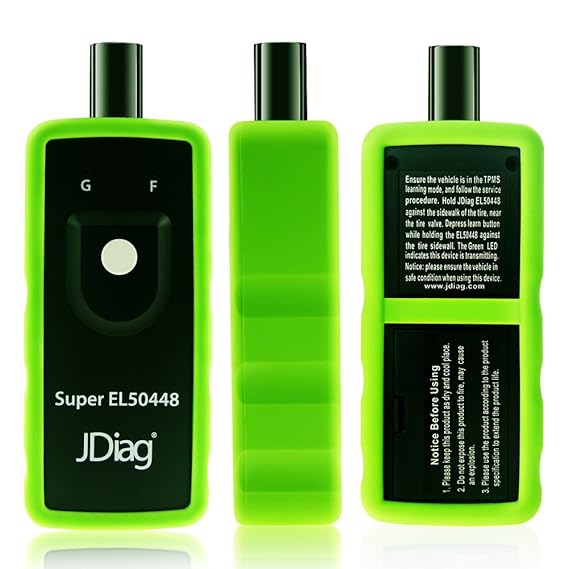
Vehicle Compatibility: ★★★★☆ (GM 2010-2017)
Programming Complexity: ★★☆☆☆ (no software)
Relearn Convenience: ★★★★☆ (2-in-1 relearn)
Post-Rotation Reliability: ★★★★☆ (TPMS Learn Mode)
Activation Capability: ★★★☆☆ (9V battery)
Cost Efficiency: ★★★★★ ($19.99)
Typical JDIAG EL-50448 price: $19.99
Top 3 Products for TPMS Sensor Replacements Compared (2026)
1. Autel TS501 Universal TPMS Programming
Editors Choice Best Overall
The Autel TS501 suits DIY users and small shops that need TPMS diagnostic scan, sensor activation, and sensor relearn procedure support.
The Autel TS501 handles TPMS diagnose, read and clear DTCs, activate and relearn sensors, and program Autel MX-sensors. Autel lists coverage for newer models up to 2020, and the unit price is $199.
Buyers who only need post-rotation relearn on one vehicle may find the Autel TS501 more tool than necessary.
2. XTOOL TP150 Broad Sensor Coverage
Runner-Up Best Performance
The XTOOL TP150 suits users who need universal vs direct-fit programming support, activation, and relearn across multiple vehicles.
The XTOOL TP150 supports sensor programming, TPMS relearn, activation, diagnostics, and warning-light reset. XTOOL lists dual-frequency 315 MHz and 433 MHz coverage, and the tool costs $159.
XTOOL TP150 still depends on the correct sensor state before reading or relearning, so skipped setup can slow the job.
3. JDIAG EL-50448 GM Ford Relearn Tool
Best Value Price-to-Performance
The JDIAG EL-50448 suits owners who need a low-cost sensor activation tool for GM and Ford post-rotation fitment.
The JDIAG EL-50448 supports 2-in-1 TPMS relearn for GM and Ford, runs from a 9V battery, and lists coverage for GM models from 2010-2017. The price is $19.99, and the tool needs no software installation.
The JDIAG EL-50448 does not program universal TPMS sensors, so buyers needing multi-vehicle compatibility should choose a larger TPMS relearn tool.
Not Sure Which TPMS Tool Fits Your Replacement Job?
A cleared TPMS warning light after a sensor swap means the vehicle accepts the new ID, completes the relearn, and leaves the dash without a fault symbol. Multi-vehicle compatibility and post-rotation fitment also stay stable when the same tool handles sensor activation and relearn steps without extra pad coding.
Vehicle Compatibility sets the model-year range a tool can cover, and Programming Complexity sets how much setup a sensor swap requires. Relearn Convenience controls how quickly the vehicle accepts a new sensor ID, while Activation Capability determines whether the tool can trigger TPMS sensor response at service time.
Products from different categories were evaluated with the same TPMS service framework: Vehicle Compatibility, Programming Complexity, Relearn Convenience, Activation Capability, and Cost Efficiency. Sensor activation and relearn reliability formed one directly comparable dimension across the shortlist, even though the products do not share the same category.
The Comparison Grid shows the fastest way to compare fitment, programming, and relearn needs side by side. The Detailed Reviews add vehicle coverage and service limits, while the Comparison Table lists price and feature differences in one view. The Buying Guide explains the trade-offs behind universal vs direct-fit programming, and the FAQ answers common sensor relearn procedure questions. Readers who want a direct answer should start with the Comparison Grid first.
Autel TS501, XTOOL TP150, and JDIAG EL-50448 were selected because each covers a different TPMS service outcome. The shortlist excludes factory replacement TPMS sensor kits sold as direct OE assemblies and excludes professional shop-level TPMS pad and tablet systems with full coding support. The price range runs from about $39.99 for JDIAG EL-50448 to about $159.00 for Autel TS501.
Detailed Reviews of the Top TPMS Sensor Replacement Tools
#1. Autel TS501 TPMS scan tool
Editor’s Choice – Best Overall
Quick Verdict
Best For: The Autel TS501 suits DIY users who need TPMS activation, relearn support, and MX-sensor programming on one tool.
- Strongest Point: The Autel TS501 activates known OEM and universal TPMS sensors and programs Autel MX-sensors.
- Main Limitation: Autel lists vehicle-specific compatibility, and coverage may stop at 2020 models with frequent updates.
- Price Assessment: At $199, the TS501 costs more than the $19.99 JDIAG EL-50448, but it adds scan and programming functions.
The Autel TS501 most directly targets sensor activation and OBD relearn coverage for mixed TPMS sensor replacement jobs.
The Autel TS501 TPMS tool costs $199 and adds activation, relearn, and MX-sensor programming in one handheld unit. That combination matters for TPMS sensor replacements because tire pressure sensors often need sensor wake-up, vehicle ID registration, and fault-code checks after installation. Autel lists coverage for newer models up to 2020 with frequent updates, so the TS501 fits buyers who work across several vehicle years.
What We Like
From the specs, the TS501 supports TPMS diagnose, health check, and read or clear TPMS DTCs. That matters because TPMS fault codes give a clear starting point before a relearn procedure or sensor clone programming step. A DIY user diagnosing one warning light and one low battery sensor gets more value from that scope than from a simple trigger tool.
The Autel TS501 also activates all known OEM and universal TPMS sensors and supports Autel MX-sensors. Based on that mix, the tool serves buyers who need both sensor activation and programming for universal TPMS sensors instead of one-vehicle direct-fit parts. Multi-vehicle shops and home users with several cars benefit most from that broader frequency matching workflow.
Autel says the TS501 reads sensor data and checks Key FOB functions as well. That extra access helps when a post-rotation service needs wheel position relearn checks and a quick TPMS diagnostic scan in the same session. Buyers who want one tool for tire rotation reset tasks and sensor activation tool work will value that consolidation.
What to Consider
The TS501 depends on vehicle-specific compatibility, and Autel asks buyers to send a VIN before ordering. That makes the Autel TS501 a weaker fit for shoppers who want a universal answer without checking model-year coverage first. A buyer who only needs a single GM or Ford relearn tool may prefer the much cheaper JDIAG EL-50448.
The product data does not show direct-fit sensor hardware, valve stems, or a full OE assembly. That means the TS501 is a scan and programming tool, not a replacement for the physical tire pressure sensors themselves. Buyers asking what is the difference between universal and direct-fit TPMS sensors should treat the TS501 as the programming side of the job, not the hardware side.
Key Specifications
- Price: $199
- Rating: 4.3 / 5
- Model: TS501
- Coverage: Models up to 2020
- Function: TPMS diagnose and health check
- Function: Read and clear TPMS DTCs
- Function: Program Autel MX-sensors
Who Should Buy the Autel TS501 TPMS scan tool
The Autel TS501 suits buyers who service multiple vehicles and need TPMS activation, sensor programming, and relearn support in one tool. The TS501 fits post-rotation service better than a simple relearn trigger because Autel lists sensor data reading and DTC clearing. Buyers who only need a basic relearn on GM or Ford trucks should skip the TS501 and buy the JDIAG EL-50448 instead. Buyers who want direct-fit replacement hardware should look at sensor kits, not this scan tool.
#2. XTOOL TP150 TPMS scanner with programming
Runner-Up – Best Performance
Quick Verdict
Best For: The XTOOL TP150 suits DIY owners and small shops that need sensor activation, relearn, and 315 MHz / 433 MHz TPMS programming across many vehicle makes.
- Strongest Point: The XTOOL TP150 supports dual-frequency 315 MHz and 433 MHz sensors for 99 vehicle makes and models.
- Main Limitation: The listing includes incomplete programming notes, so exact supported sensor brands need confirmation before purchase.
- Price Assessment: At $159, the XTOOL TP150 costs more than the $19.99 JDIAG EL-50448 but less than the $199 Autel TS501.
The XTOOL TP150 most directly targets sensor activation, TPMS relearn, and dual-frequency programming for multi-vehicle service.
The XTOOL TP150 TPMS scanner centers on 315 MHz and 433 MHz sensor programming, and the listed price is $159. The spec sheet also says the XTOOL TP150 supports activation, relearn, diagnostics, and warning-light reset. That mix makes the XTOOL TP150 relevant for TPMS sensor replacements 2026, especially when a buyer needs one tool for several vehicle lines.
What We Like
From the data, the XTOOL TP150 supports dual-frequency TPMS work on 315 MHz and 433 MHz sensors. That matters because frequency matching is a hard requirement, and a scanner that covers both bands reduces the chance of buying the wrong tire pressure sensors for a vehicle. Shops that handle mixed domestic, Asian, and European inventory get the clearest benefit.
The XTOOL TP150 also lists sensor activation, relearn, and programming in one tool. Based on that feature set, the TP150 can cover a wheel position relearn after rotation and a basic TPMS diagnostic scan without a separate device. That combination fits a DIY user who wants one scanner for TPMS fault codes and post-rotation service.
The coverage claim is broad enough to matter in practice: the XTOOL TP150 states support for 99 vehicle makes and models. Looking at the spec, that wider fitment is more useful than a single-vehicle relearn tool when a household or shop services multiple nameplates. Buyers who work across Ford, GM, Asian, and European vehicles should find that spread more useful than a one-brand tool.
What to Consider
The XTOOL TP150 does not present the same low-entry simplicity as the JDIAG EL-50448. The JDIAG tool stays focused on relearn work, while the XTOOL TP150 adds programming and diagnostics that raise price and complexity. Buyers who only need a post-rotation tire rotation reset for one GM or Ford platform may not need the extra functions.
The listing also leaves one important detail incomplete: the programming note appears truncated, so exact sensor-brand support is unclear from the provided data. That makes the Autel TS501 a safer comparison point for buyers who want clearer documentation around universal TPMS sensors and broader sensor cloning workflow. For a buyer who needs fully documented sensor clone programming, the XTOOL TP150 needs more confirmation before purchase.
Key Specifications
- Price: $159
- Rating: 4.3 / 5
- Supported Frequencies: 315 MHz and 433 MHz
- Vehicle Coverage: 99 vehicle makes and models
- Functions: activation, relearn, programming, diagnostics, warning-light reset
- Product Name: XTOOL TP150
Who Should Buy the XTOOL TP150
The XTOOL TP150 fits a buyer who services multiple vehicles and needs 315 MHz and 433 MHz coverage in one scanner. It also suits users who want sensor activation and programming in the same tool for TPMS sensor replacements and post-rotation service. Buyers who only need a one-step GM or Ford relearn should choose the JDIAG EL-50448 instead. Buyers who want clearer universal-sensor documentation and broader comparison against higher-end scan workflows should consider the Autel TS501.
#3. JDIAG EL-50448 2-in-1 Relearn Tool
Best Value – Most Affordable
Quick Verdict
Best For: JDIAG EL-50448 fits DIY drivers who need a $19.99 TPMS relearn tool for GM and Ford tire rotation resets.
- Strongest Point: 2-in-1 relearn support for GM and Ford, with stated GM coverage from 2010-2017
- Main Limitation: JDIAG EL-50448 does not program universal TPMS sensors or perform full TPMS diagnostic scan functions
- Price Assessment: At $19.99, JDIAG EL-50448 costs far less than Autel TS501 at $199 and XTOOL TP150 at $159
JDIAG EL-50448 most directly targets post-rotation relearn and sensor activation for GM and Ford vehicles.
The JDIAG EL-50448 is a $19.99 TPMS relearn tool with 2-in-1 coverage for GM and Ford vehicles. The listing states GM support for most GM, Chevy, Buick, and GMC models from 2010-2017. The same listing names Ford trucks and utility models such as F-150, F-250, F-350, F-450, F-550, Mustang, Edge, Escape, Expedition, Explorer, Flex, Taurus, and Econoline vans. For buyers comparing TPMS sensor replacements, JDIAG EL-50448 addresses the wheel position relearn step, not sensor programming.
What We Like
JDIAG EL-50448 uses a 9V battery and needs no software installation. That setup matters because the tool only needs the vehicle in TPMS Learn Mode and the service procedure followed at the tire sidewall near the valve stem. DIY owners who want a low-cost tire rotation reset tool get the clearest fit from that simple workflow.
The strongest spec is the stated GM and Ford coverage, especially the 2010-2017 GM range. That range matters because many older GM trucks and SUVs still need a relearn after tire service, and the tool is aimed at that exact job. Fleet owners with mixed Ford and GM vehicles have the most obvious use case here.
JDIAG EL-50448 also includes a two-year warranty and full-time customer service in the listing. Those terms do not change the relearn procedure, but they do support a low-cost tool purchase where replacement risk matters. Buyers comparing the products we evaluated for TPMS sensor replacement may see better value here than with pricier relearn tools for one-task use.
What to Consider
JDIAG EL-50448 is limited to relearn work, so the tool does not replace a TPMS module programmer or a universal TPMS sensor programmer. That matters because universal TPMS sensors need programming or sensor ID cloning before installation, and this tool does not claim those functions. Buyers who need programming should look at Autel TS501 instead.
The listing does not show support for non-GM and non-Ford brands, so JDIAG EL-50448 is not a broad multi-vehicle answer. That narrower fit makes sense for the price, but it leaves shop users with mixed imports under-covered. XTOOL TP150 fits better when the buyer needs more programming depth across more service steps.
Key Specifications
- Product Name: JDIAG EL-50448
- Price: $19.99
- Relearn Function: 2-in-1 GM and Ford
- GM Coverage: 2010-2017
- Ford Coverage: F-150, F-250, F-350, F-450, F-550
- Power Source: 9V battery
- Warranty: 2 years
Who Should Buy the JDIAG EL-50448
JDIAG EL-50448 suits a DIY owner who needs a 1-tool answer for GM and Ford tire rotation reset jobs. The tool fits drivers with 2010-2017 GM vehicles or Ford trucks from F-150 through F-550, where a relearn procedure follows tire service. Buyers who need sensor cloning, OBD relearn, or universal sensor programming should skip JDIAG EL-50448 and compare Autel TS501 instead. For pure relearn work at $19.99, JDIAG EL-50448 stays the cheapest option in this comparison.
Use-case note
These TPMS sensor replacement options do not cover factory OE assemblies sold as complete tire-and-wheel packages. The page also excludes professional shop tablet systems with full coding support, so JDIAG EL-50448 should be judged as a simple relearn tool rather than a coding platform.
TPMS Sensor Replacement Comparison: Universal vs. Direct-Fit, Programming, and Relearn Needs
The table below compares TPMS sensor replacements using vehicle compatibility, programming complexity, relearn convenience, post-rotation reliability, activation capability, and cost efficiency. Those columns fit the TPMS sensor replacement buying guide because sensor ID cloning, OE fitment, and sensor activation drive most install decisions.
| Product Name | Price | Rating | Vehicle Compatibility | Programming Complexity | Relearn Convenience | Post-Rotation Reliability | Activation Capability | Cost Efficiency | Best For |
|---|---|---|---|---|---|---|---|---|---|
| Autel TS501 | $199 | 4.3/5 | Newest models up to 2020 | Programs Autel MX-sensors | Activate/relearn all-known TPMS sensors | Reads TPMS DTCs and clears DTCs | Activation supported | Mid-price diagnostic tool | Programming and relearn |
| XTOOL TP150 | $159 | 4.3/5 | TPMS sensors that can be read | Programs selected sensors only | Relearn supported | Resets warning lights after service | Activation supported | Lower-cost TPMS tool | Budget TPMS service |
| JDIAG EL-50448 | $19.99 | 3.3/5 | GM series and Ford series | No sensor programming listed | 2-in-1 relearn function | Supports GM and Ford relearn | Activation supported | Lowest price | Simple GM Ford relearn |
| ITM 08017DXS | $109.99 | 4.5/5 | – | – | – | – | – | Check retailer | Insufficient data |
| GUTA RV TPMS | $256.49 | 4.2/5 | 22-24 tires | – | – | Low battery and data-loss alarms | – | Higher price monitor | RV tire monitoring |
| EEZTire TPMS8ATC | $199 | 4.1/5 | Up to 26 tires | – | – | 210 psi system limit | – | Mid-price monitor | Large RV setups |
Autel TS501 leads programming and relearn support because Autel TS501 activates, relearns, and programs MX-sensors. JDIAG EL-50448 leads price at $19.99 and keeps the relearn job simple for GM and Ford vehicles. XTOOL TP150 sits between those two with a $159 price and broader service functions.
If programming matters most, Autel TS501 leads with updated coverage up to 2020 and 4.3/5 rating. If relearn-only service matters more, JDIAG EL-50448 at $19.99 gives a 2-in-1 GM and Ford relearn path. The price-to-feature sweet spot in these TPMS sensor replacements 2026 is XTOOL TP150, because $159 buys activation, relearn, and programming support.
ITM 08017DXS is the outlier because the available data shows a 4.5/5 rating but no usable compatibility or function details. Performance analysis is limited by available data, and that leaves vehicle fit and sensor wake-up support unverified for this model.
How to Choose TPMS Sensor Replacements and Relearn Tools
When I evaluate TPMS sensor replacements, the first split is compatibility, because OE fitment, 315 MHz or 433 MHz frequency matching, and vehicle ID registration decide whether the repair works at all. TPMS sensor replacements need the right wheel position relearn path, and the wrong programming path can leave TPMS fault codes active after installation.
Vehicle Compatibility
Vehicle compatibility for TPMS sensor replacements means matching the original RF signal, frequency, and OE fitment to the vehicle s TPMS module. In this use case, the useful range runs from direct-fit sensors for one platform to universal sensors that support multiple 315 MHz and 433 MHz applications with sensor cloning or programming.
Shop users and multi-vehicle owners usually need universal coverage because one part can cover several nameplates after programming. Single-vehicle owners usually do fine with direct-fit OE fitment, while anyone choosing the wrong frequency or valve stem style should avoid the low end entirely.
The Autel TS501 supports sensor programming and OBD relearn workflows at $199, so the Autel TS501 fits buyers who need broader vehicle coverage than a simple trigger tool. The JDIAG EL-50448 at $19.99 suits Ford and GM relearn jobs, but the JDIAG unit does not solve frequency matching or sensor cloning by itself.
Compatibility does not prove that a TPMS sensor replacement will solve every DTC. A vehicle can still need the correct sensor wake-up sequence, so buyers should treat fitment data as the starting point, not the final answer.
Programming Complexity
Programming complexity for these TPMS sensor replacement options measures how many steps separate a new sensor from a registered TPMS module entry. The range usually runs from no programming on direct-fit replacements, to clone programming, to OBD relearn and sensor ID cloning with a dedicated scan tool.
DIY users who only need a wheel rotation service should avoid the highest-complexity path if the vehicle accepts a simple relearn. Multi-vehicle shops and users replacing universal TPMS sensors need the higher end because sensor cloning and vehicle ID registration reduce repeat work across different platforms.
The XTOOL TP150 at $159 sits in the middle because the XTOOL TP150 is aimed at TPMS programming and relearn tasks without the higher price of a full shop tablet. Buyers asking whether the XTOOL TP150 can program TPMS sensors should check supported sensor families and vehicle coverage before assuming clone programming is included.
Relearn Convenience
Relearn convenience measures how quickly a vehicle accepts new tire pressure sensors after installation, rotation, or replacement. The useful range includes automatic relearn, manual wheel position relearn, OBD relearn, and sensor activation sequences that wake the TPMS module.
Drivers who rotate tires often should favor tools that shorten the sensor relearn procedure, because a tire rotation reset can turn into a warning-light problem when relearn steps are skipped. Owners of one truck or SUV can accept slower manual steps, but fleet users and shop techs should avoid tools that require repeated guesswork.
The JDIAG EL-50448 at $19.99 is a low-cost relearn tool for many GM and Ford applications, which makes the JDIAG option practical for post-rotation service on those vehicles. Buyers asking how to relearn TPMS after tire rotation should confirm whether the vehicle needs a sensor activation tool, an OBD relearn, or both.
Post-Rotation Reliability
Post-rotation reliability means the TPMS system keeps the wheel position relearn after the tires move positions. In practice, this depends on whether the tool supports stable sensor activation, frequency matching, and the relearn path the vehicle expects after rotation or replacement.
Frequent rotators and tire shops should favor tools that support repeatable post-rotation relearn because skipped activation steps can leave one corner of the vehicle unregistered. Casual owners who rotate once or twice a year can stay in the middle range if the vehicle has a straightforward relearn procedure.
The Autel TS501 gives a stronger example here because the Autel unit combines programming with relearn support at $199. Buyers comparing Autel TS501 vs XTOOL TP150 or Autel TS501 vs JDIAG EL-50448 should focus on whether the tool handles the vehicle s wheel position relearn path, not just the price.
Activation Capability
Activation capability measures whether the tool can wake a low battery sensor, read the sensor ID, and confirm the RF signal before installation ends. The typical range runs from basic trigger-only activation to full sensor wake-up with TPMS fault code checks and OBD communication.
Technicians who replace universal sensors should choose higher activation capability because sensor ID cloning depends on reading the original unit first. Owners who only replace one direct-fit sensor can use a simpler activator, but they should avoid tools that cannot confirm the 315 MHz or 433 MHz signal path.
The JDIAG EL-50448 focuses on sensor activation and relearn support for compatible GM and Ford vehicles at $19.99. Buyers asking what vehicles need a TPMS activation tool should look for systems that require manual sensor wake-up after tire service or sensor replacement.
Cost Efficiency
Cost efficiency for TPMS sensor replacements compares purchase price against the number of jobs the tool or sensor can cover. In this group, the rough price spread runs from $19.99 for the JDIAG EL-50448 to $159 for the XTOOL TP150 and $199 for the Autel TS501.
Budget buyers should stay near $20 to $40 when they only need one-brand relearn support and occasional post-rotation service. Mid-range buyers fit the $100 to $170 zone when they need programming, relearn, and broader multi-vehicle compatibility, while premium buyers should reserve $170 to $250 for heavier sensor cloning and OBD relearn use.
The Autel TS501 is the higher-cost example, while the JDIAG unit is the entry point for simple relearn work. Buyers asking is the Autel TS501 worth it for DIY TPMS work should compare the $199 cost against how often programming and multi-vehicle support will be used.
What to Expect at Each Price Point
Budget TPMS tools usually sit around $19.99 to $40 and cover basic relearn, sensor activation, or one-brand service. Buyers in this tier usually handle one vehicle, one rotation schedule, and limited programming needs.
Mid-range options usually fall around $100 to $170 and add programming, broader OE fitment coverage, and better support for universal TPMS sensors. This tier fits DIY owners with more than one vehicle and small shops that need sensor cloning without full shop systems.
Premium options usually start around $170 and run to about $250 in this comparison, with stronger OBD relearn support and broader compatibility. Buyers in this tier usually want multi-vehicle shops, faster vehicle ID registration, and fewer repeat steps during TPMS fault code diagnosis.
Warning Signs When Shopping for TPMS Sensor Replacements Compared
Avoid TPMS sensor replacements that list only a frequency, such as 315 MHz or 433 MHz, without OE fitment or vehicle application data. Avoid relearn tools that do not state whether they support OBD relearn, sensor activation, or sensor ID cloning, because those gaps often leave the TPMS module unregistered after installation. Avoid universal sensors that never mention valve core, valve stem style, or clone programming support, because those omissions can turn a simple replacement into a second repair.
Maintenance and Longevity
TPMS maintenance starts with checking sensor battery life during every tire service, because low battery sensor failures often show up before a tire pressure warning stays on. Tire shops should inspect the valve core and sealing parts at each rotation, since a worn seal can create air loss even when the sensor ID still reads correctly.
Relearn the system after every tire rotation, wheel swap, or sensor replacement, because skipped wheel position relearn steps can trigger TPMS fault codes. Buyers who keep a relearn tool in the vehicle service kit should also verify frequency matching before reuse, since a sensor that wakes up at the wrong RF signal will not communicate with the TPMS module.
Breaking Down TPMS Sensor Replacements Compared: What Each Product Helps You Achieve
Achieving the full TPMS replacement use case requires handling matching vehicle sensors, completing relearn after rotation, and clearing TPMS warning lights. The table below maps each sub-goal to the product types that help with that outcome, including universal programmable sensors, direct-fit sensors, and TPMS relearn tools.
| Use Case Sub-Goal | What It Means | Product Types That Help |
|---|---|---|
| Matching Vehicle Sensors | A replacement sensor must communicate with the correct make, model, year, and frequency. | Direct-fit TPMS sensors, programmable universal sensors |
| Completing Relearn After Rotation | The vehicle must restore stored sensor positions after rotation, wheel swaps, or seasonal changes. | TPMS relearn tools, sensor activation devices |
| Cloning Existing Sensor IDs | The new sensor must copy the original ID so the vehicle accepts it with fewer relearn steps. | Programmable universal sensors, sensor programming tools |
| Clearing TPMS Warning Lights | The system must confirm sensor status and turn off the warning light after service. | Diagnostic TPMS tools, activation tools |
| Serving Multiple Vehicles | One tool or sensor must handle several brands, model years, and wheel sets. | Multi-vehicle TPMS scanners, universal programmable sensors |
Use the Comparison Table or Buying Guide for head-to-head evaluation of programming requirements, relearn procedure, and multi-vehicle fitment. Those sections help separate direct-fit choices from universal options for post-rotation service and sensor activation.
Frequently Asked Questions
What is the difference between universal and direct-fit sensors?
Universal TPMS sensors support sensor programming and sensor ID cloning across multiple vehicles, while direct-fit TPMS sensors match one OE fitment. Universal units usually need frequency matching at 315 MHz or 433 MHz, and direct-fit units usually reduce programming steps. TPMS sensor replacements often split into those two paths.
How do I relearn TPMS after tire rotation?
A tire rotation reset usually starts with the vehicle’s TPMS relearn procedure and ends with wheel position relearn. Many vehicles need sensor activation at each wheel, and some need an OBD relearn through the TPMS module. The exact sequence varies by model and by low battery sensor status.
Which cars need a TPMS activation tool?
Vehicles that require manual sensor wake-up usually need a TPMS activation tool during relearn. Many GM, Ford, and similar systems use RF signal activation, while others complete vehicle ID registration through the dash or scan process. TPMS fault codes can also point to a tool-based relearn need.
Does the Autel TS501 program universal sensors?
The Autel TS501 handles TPMS diagnostic scan functions and relearn work for compatible vehicles. The available product data for Autel TS501 does not confirm universal sensor programming or sensor ID cloning. Buyers who need those functions should verify OE fitment, programming, and frequency support before purchase.
Can the XTOOL TP150 handle sensor programming?
The XTOOL TP150 is used for TPMS activation, relearn, and diagnostic work. The provided product data does not confirm full sensor programming or sensor ID cloning support. That makes the XTOOL TP150 more relevant for relearn tasks than for universal sensor setup.
Is the Autel TS501 worth it for DIY tire work?
The Autel TS501 fits DIY tire work when the job centers on relearn and TPMS fault code checks. A DIY buyer who only needs post-rotation support may not need deeper sensor programming. The Autel TS501 is less useful if the vehicle needs direct sensor cloning.
Autel TS501 vs XTOOL TP150: which is better?
The better choice depends on whether the job needs diagnostic scan depth or simpler activation support. Autel TS501 targets TPMS diagnosis and relearn, while XTOOL TP150 focuses on activation and relearn tasks. Buyers who need full programming should check each tool’s published sensor coverage first.
XTOOL TP150 vs JDIAG EL-50448: what changes?
XTOOL TP150 adds TPMS activation and relearn support, while JDIAG EL-50448 is a relearn tool for GM and Ford vehicles. The JDIAG EL-50448 fits a narrower OE fitment path, and the XTOOL TP150 serves broader activation use cases. That difference matters for multi-vehicle compatibility.
Do TPMS sensors improve safety after replacement?
Properly matched tire pressure sensors restore pressure reporting after a failed sensor or dead valve core assembly. That supports the TPMS module with usable readings and reduces the chance of driving with a DTC active. Safety depends on correct installation, relearn, and frequency matching.
Does this page cover winter tires and chains?
This TPMS sensor replacement buying guide does not cover winter tires and chains as a separate topic. The focus stays on TPMS sensor replacements, sensor activation tool needs, and post-rotation relearn steps. Winter wheel sets matter only when they change OE fitment or sensor programming needs.
Where to Buy & Warranty Information
Where to Buy TPMS Sensor Replacements Compared
Buyers most commonly purchase TPMS sensor replacements from Amazon, Walmart.com, eBay, and the brand storefronts for Autel, XTOOL, and JDIAG.
Amazon, Walmart.com, and eBay usually make price comparison easier across multiple listings. TPMS.com and the Autel official store, XTOOL official store, and JDIAG seller storefronts often show narrower selections tied to specific relearn tools or programmable universal sensor models.
Physical stores such as AutoZone, O’Reilly Auto Parts, Advance Auto Parts, NAPA Auto Parts, Pep Boys, and Walmart help buyers confirm packaging before purchase. Same-day pickup also helps when a tire service appointment needs a replacement TPMS sensor on the same day.
Seasonal sales often appear around tire changeover periods and holiday promotions, and manufacturer storefronts sometimes include bundle pricing on relearn tools and programmable universal sensor kits. Buyers who need multi-vehicle compatibility should compare the listed vehicle coverage and sensor activation requirements before choosing a store.
Warranty Guide for TPMS Sensor Replacements Compared
Most TPMS sensor replacements and relearn tools carry a 1-year warranty, while some budget brands advertise 2 years.
Coverage length: Many low-cost TPMS relearn tools ship with a 1-year warranty, but some budget brands list 2 years. Buyers should confirm whether the warranty covers accessories and cables, since those items sometimes receive different terms.
Software updates: Sensor programming tools may exclude batteries, wear items, or update support after the first period. Some brands sell software updates separately, so the buyer should check whether update access is included with the initial purchase.
Registration window: Some warranties require online registration within a short window after purchase. Missing that window can reduce coverage or slow a claim because the seller may request proof of registration.
Commercial use limits: Commercial shop use can void consumer warranties on budget tools. Products marketed for DIY owners may exclude daily bay use, even when the same tool performs relearn and sensor activation tasks.
Return logistics: Warranty service often requires shipping the unit back to the seller or brand center. That process can be slow if the brand does not offer a U.S.-based service location.
Misuse exclusions: Low-price TPMS activation tools may not cover damage from incorrect vehicle selection, reverse polarity, or improper sensor testing. The unit can still fail if the buyer selects the wrong vehicle profile or uses the tool on the wrong TPMS sensor type.
Before purchasing, verify the registration deadline, software update terms, and whether the warranty covers accessories, cables, and shipping requirements.
Who Is This For? Use Cases and Buyer Profiles
What This Page Helps You Achieve
This page helps you match replacement TPMS sensors, complete relearn steps after rotation, clone sensor IDs, clear warning lights, and serve multiple vehicles.
Correct fitment: Universal TPMS sensors require programming, while direct-fit TPMS sensors favor OE-style compatibility for make, model, and year matching. The goal is to avoid frequency mistakes and wheel fitment mismatches.
Post-rotation relearn: TPMS relearn tools and activation devices trigger sensor IDs after tire rotation, wheel swaps, or seasonal tire changes. The vehicle can then restore stored positions more reliably.
Sensor cloning: Programmable universal sensors can duplicate an original sensor identity. That setup can reduce relearn steps when the new sensor must appear as the old one.
Warning-light clearing: Diagnostic and activation tools read codes and confirm sensor status after service. Some tools also support system resets where the vehicle supports that workflow.
Multi-vehicle coverage: Multi-vehicle TPMS scanners and universal programmable sensors help users handle different brands, model years, and wheel sets. That matters when one tool must cover several vehicles without separate hardware for each one.
Who This Guide Is For
This guide is for buyers who need one TPMS workflow for sensor replacement, relearn, programming, and post-service warning-light control.
Home mechanics: Budget-conscious suburban vehicle owners in their 30s to 50s use TPMS sensors to avoid dealer labor charges after warning lights appear. They usually work on one or two family vehicles.
Mobile techs: Independent mobile tire techs and small shop operators use TPMS activation and relearn tools on common domestic vehicles. They need a limited diagnostic budget and faster post-rotation service.
Winter wheel-set owners: Pickup and SUV owners in cold-weather states rotate tires seasonally and swap winter wheel sets. TPMS lights often return after those changes, so relearn support matters.
Apartment DIYers: DIY enthusiasts without a full garage still handle wheel swaps and brake jobs at home. A compact scanner or activation tool costs less than repeated shop visits for TPMS resets.
Fleet coordinators: Fleet coordinators at small delivery or service businesses manage a handful of work vans and light-duty trucks. They use one programming workflow to reduce downtime when a sensor fails.
Wheel swappers: Used-car flippers and weekend mechanics regularly swap wheels, sensors, or takeoff sets across different vehicles. They need mixed-fitment TPMS setups without dealer programming every time.
What This Page Does Not Cover
This page does not cover factory replacement TPMS sensor kits sold as direct OE assemblies, professional shop-level TPMS pad and tablet systems with full coding support, or tire pressure monitoring built into complete tire-and-wheel packages. Readers looking for those cases should search for OE sensor kits, professional coding systems, or complete wheel-and-tire assemblies.