There are three primary types of alternators distinguished by their electrical output capacity and intended application. While marketing often creates sub-categories based on branding, the technical distinction that changes a buying decision is the amperage rating and the internal cooling design. A standard alternator provides the baseline power for a vehicle’s basic electronics, while high-output units are engineered to handle sustained heavy loads that would otherwise cause voltage drops or premature component failure.
What are Standard Alternators?
Standard alternators provide the base electrical output required to run a vehicle’s primary systems, such as the engine management system, headlights, and basic interior electronics. These units are designed to meet the factory specifications of the original equipment manufacturer (OEM) for a specific vehicle model.
You should choose a standard alternator if your vehicle’s electrical needs remain unchanged from the factory. This type is ideal for daily drivers where the only accessories are standard items like a radio or a basic power outlet. Because they are designed for standard loads, these units offer the most balanced price point and are the most common replacement type.
The trade-off for a standard alternator is its limited overhead. If you add high-draw accessories, the alternator may struggle to keep the battery charged while the engine is idling. This can lead to an “alternator warning” light or a slow drain on the battery during long periods of low-speed driving.
Where these choices show up in our reviews
Prices across these 3 run from $102.44 to $127.99; each one has a full review here.

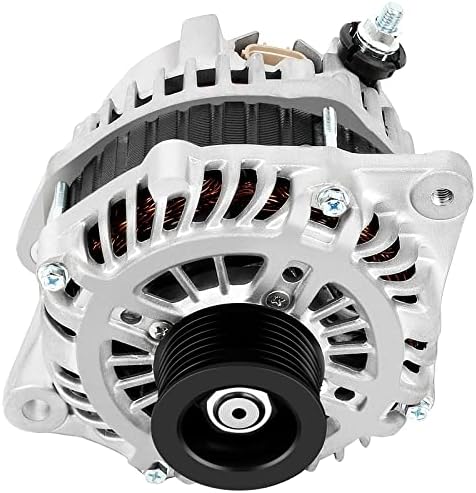
SCITOO 11341 Alternator for Nissan Altima Maxima Murano
$102.44 price checked August 2026
If you own a Ford truck, you can compare the best alternator for f-150 models to find a durable replacement.

What are High-Output Alternators?
High-output alternators are engineered to produce significantly higher amperage than the original factory unit, often doubling or tripling the standard output. These units feature heavy-duty internal components, such as larger diodes and reinforced cooling fins, to manage the increased heat generated by higher current flow.
You need a high-output alternator if you have installed heavy-duty accessories such as winches, large refrigerators, high-powered lighting arrays, or extensive auxiliary battery systems. These applications create a constant “parasitic” draw that a standard unit cannot replenish quickly enough. By providing a higher amperage ceiling, these units ensure that the voltage remains stable even when multiple high-draw components are active simultaneously.
The primary compromise for a high-output alternator is the cost, which sits at the highest end of the market. Additionally, because they produce more current, they may require specific wiring considerations or a cooling layout that differs from the stock configuration to ensure the unit does not overheat under sustained heavy loads.
What are Remanufactured Alternators?
Remanufactured alternators are used units that have been disassembled, cleaned, and rebuilt to meet specific performance standards. Unlike a new unit, which is built from virgin materials, a remanufactured unit focuses on restoring the core functionality of the alternator’s internal components.
Remanufactured alternators are a viable option for owners who prioritize a lower initial purchase price over having a brand-new component. They are often used in fleet vehicles or for older cars where the electrical demands are low and the budget is a primary constraint. They provide a functional replacement that meets standard OEM output requirements.
For a deeper dive into the mechanics, see how an alternator works and functions within your vehicle’s electrical system.
The compromise with a remanufactured unit is the potential for a shorter service life compared to a new unit. While they are tested to meet functional benchmarks, the internal bearings and brushes may not have the same longevity as a new production part. They are generally the most affordable option but sit at the lower end of the reliability spectrum.
Alternator Type Comparison
| Alternator Type | Best-Fit Buyer | Main Advantage | Main Compromise |
|---|---|---|---|
| Standard | Daily drivers with basic electronics | Cost-effective and OEM-matched | Limited overhead for extra accessories |
| High-Output | Off-roaders or campers with winches/fridges | High amperage for heavy loads | Higher price point |
| Remanufactured | Budget-conscious owners of older vehicles | Lowest initial cost | Shorter expected service life |
How do you know which alternator type you need?
To determine which alternator type fits your situation, you must evaluate your vehicle’s current electrical load and your plans for future modifications.
Do you only use standard vehicle electronics?
If your vehicle only runs the factory-installed components, a standard alternator is the correct choice. You should confirm that your current battery is holding a charge and that your headlights and dashboard electronics function normally. If these are your only requirements, a standard unit provides the most efficient balance of cost and performance.
Have you installed heavy-duty accessories?
You require a high-output alternator if you have added any of the following:
- Electric winches or heavy-duty hydraulic pumps
- Large auxiliary battery banks (over 100Ah)
- High-wattage LED light bars or off-road lighting
- Compressor-based refrigerators or air conditioning units
Is the project strictly budget-dependent?
If you are performing a basic repair on an older vehicle and do not plan on adding any additional electronics, a remanufactured alternator may be sufficient. However, if the vehicle is a primary daily driver, the increased longevity of a new standard unit often provides better long-term value than a remanufactured option.
What technical standards should you check?
Before selecting a type, you must confirm the physical and electrical compatibility of the alternator with your vehicle’s existing system.
Check the voltage regulation standard.
Most modern vehicles use internal voltage regulation to maintain a steady 13.5V to 14.5V output. Ensure the alternator type you choose matches your vehicle’s regulation style (internal vs. external) to prevent overcharging the battery or under-powering the system.
Verify the connector pin configuration.
Alternators use specific plug configurations to communicate with the vehicle’s computer. A high-output alternator may have a different plug than a standard unit. You must confirm that the connector pins match your vehicle’s wiring harness to avoid electrical shorts or a failure to seat the plug correctly.
Confirm the pulley diameter.
The pulley diameter must match the serpentine belt system of your vehicle. A mismatch in pulley size can cause the belt to slip or wear prematurely. Ensure the alternator type selected uses the correct pulley diameter for your specific engine model.