Drivers typically seek a dual exhaust system to improve engine breathing, reduce backpressure, and achieve a deeper, more resonant exhaust note. While a full dual outlet system is the standard way to achieve these results, it is not the only route to improving vehicle acoustics or performance. Depending on your goals, you might find that a different configuration or service provides the same audible and mechanical benefits without the complexity of a full dual system.
Who should consider custom fabrication for a dual exhaust?
Custom fabrication involves hiring a professional shop to design and weld a bespoke dual exhaust system tailored to your specific vehicle chassis. This route provides a unique engineering solution where off-the-shelf kits might have clearance issues or suboptimal flow paths. Because a technician creates the system from scratch, it can account for specific modifications like custom headers or non-standard engine mounts.
The cost of custom fabrication is significantly higher than purchasing a pre-made kit because you are paying for engineering time and specialized labor. This option beats buying a kit when you own a rare vehicle, a custom-built project car, or a truck with unique modifications that prevent standard products from fitting. It stops making sense if your vehicle is a common production model where mass-produced kits are designed to fit the factory mounting points perfectly.
Where these choices show up in our reviews
3 reviewed options, $227.99 to $819.90, with the full write-up behind each name.


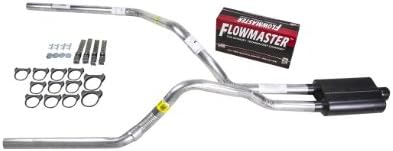
Rough Country Performance Dual Outlet Exhaust 96020
If you are looking for a durable finish, see our comparison of the best stainless dual exhaust system.
$549.95 price checked August 2026
Is a high-flow single outlet exhaust a good alternative?
A high-flow single outlet exhaust uses a larger diameter pipe and a high-efficiency muffler to achieve similar flow characteristics to a dual system. By increasing the internal volume and smoothing the path of the exhaust gases, a single-exit system can reduce backpressure and provide a more aggressive tone without requiring two exits. This is often achieved through mandrel-bent piping and large-bore resonators.
Understanding the technical details is easier when you view our plain English guide to exhaust specs.
This alternative is generally more cost-effective than a dual system because it requires less piping, fewer welds, and a simpler muffler configuration. It beats buying a dual exhaust system if your primary goal is performance gains and a louder sound rather than a specific aesthetic. It stops making sense when you require the specific symmetry of dual tips or if your engine produces enough heat and volume that a single exit creates excessive heat buildup near the rear bumper.
Can you buy a used dual exhaust system?
Buying a used dual exhaust system involves sourcing a complete kit from a previous owner, often from a vehicle with a similar engine configuration. This route allows you to acquire high-quality materials like T304 stainless steel at a lower price point than new retail. Because exhaust systems are durable and do not have “wear” items like brake pads, used systems often retain much of their original structural integrity.
The cost of a used system is lower than a new kit, though you must account for the time spent searching for a compatible match. This beats buying a new system if you are on a strict budget and can find a kit that matches your vehicle’s specific dimensions. It stops making sense if the used system requires significant modification to fit your car or if the internal baffles have been damaged by excessive heat or impact.
Does a remap or tune replace a dual exhaust?
A remap or engine tune adjusts the electronic control unit (ECU) to optimize fuel delivery and ignition timing, which can sometimes compensate for the lack of a dual exhaust. While it does not change the physical path of the exhaust gases, it can help the engine operate more efficiently under load, potentially recovering some of the power lost to restrictive factory piping. This is a software-based approach to performance rather than a mechanical one.
The cost of a tune is generally lower than a high-end exhaust system but does not provide the same acoustic changes. This beats buying a dual exhaust if your only goal is a slight increase in horsepower and you do not care about the sound of the engine. It stops making sense as a substitute for a dual exhaust because no amount of software can replicate the physical reduction in backpressure or the specific resonance of a dual-outlet system.
Comparison of alternatives to buying a dual exhaust system
| Route | Who it suits | Main Advantage | Where it breaks down |
|---|---|---|---|
| Custom Fabrication | Custom builds and rare vehicles | Perfect fitment and custom flow | High labor costs and long lead times |
| High-Flow Single Outlet | Budget-conscious performance seekers | Lower cost and simpler installation | Lacks the dual-tip aesthetic and symmetry |
| Used Systems | Budget-focused DIYers | Significant cost savings | Fitment risks and potential hidden damage |
| Engine Remapping | Power-only seekers | No physical installation required | Provides zero change to exhaust note |
When is buying a dual exhaust system the right choice?
Buying a dual exhaust system is the correct choice when you require a specific balance of performance, aesthetics, and sound that only a dual-pipe configuration can provide. If your vehicle is a standard production model, a pre-made kit ensures that the hangers and pipe diameters are engineered to work with your specific chassis. It is the right choice when you want the visual symmetry of dual outlets and the specific resonance that comes from splitting the exhaust flow into two distinct paths.
This path is also correct when you want a “bolt-on” solution that provides a predictable result without the variables of custom fabrication or the uncertainty of used parts. If you have the budget to move beyond single-exit alternatives, a dual system provides the most comprehensive upgrade for both the engine’s breathing and the vehicle’s auditory profile.