Tire diameter refers to the total height of the tire from the ground to the top of the tread in inches. Your specific vehicle’s clearance, suspension travel, and intended use determine which diameter is correct for your setup.
Which Tire Diameter Suits Your Situation?
| If this is you | The Tire Diameter that suits you | Why |
|---|---|---|
| You are keeping the factory wheels and only want a slight increase in ground clearance. | A diameter within 1-2 inches of your stock size. | This range typically allows for a larger footprint without requiring modifications to the wheel well or steering geometry. |
| You are running a dedicated off-road build with significant suspension lift. | A diameter 4-6 inches larger than stock. | High-clearance builds provide the space necessary to accommodate larger diameters for increased approach and departure angles. |
| You need maximum load capacity for heavy towing or hauling. | A diameter that maintains your current height but increases width. | Increasing diameter can change the effective gear ratio; maintaining height while increasing width preserves the intended load distribution. |
| You are looking for a “plus-size” street look for a sport truck or SUV. | A diameter 1-3 inches larger than stock. | This provides a larger aesthetic and better grip while staying within the limits of standard factory components. |
Products in this category with a full review here
These 3 have their own full review on this site, and run from $159.95 to $308.86.


JOYLDIAS 2-Seater Ride On Truck
If you are looking for a performance upgrade, see our comparison of Can-Am 1000 Maverick clutch kits.
$269.99 price checked August 2026
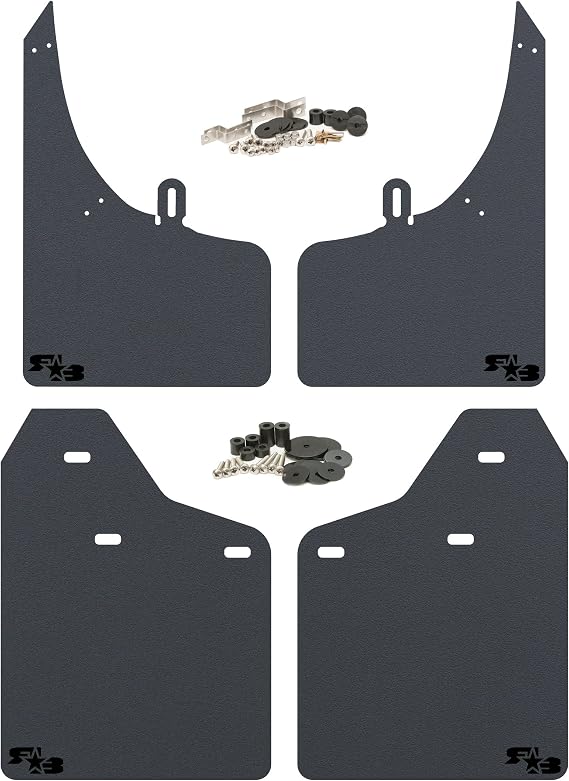
RokBlokz Mud Flaps for 2005-2015 Toyota Tacoma
$159.95 price checked August 2026
Read our full RokBlokz Tacoma Mud Flaps review
Proper fitment is essential, so learn how to choose the correct tire offset.
How Do I Find My Current Tire Diameter?
To find your current tire diameter, locate the sidewall of the tire currently mounted on your vehicle. Look for a string of numbers typically formatted as Width / Aspect Ratio / Rim Diameter, such as 265/70R17.
Calculating the Diameter from Sidewall Markings
The tire diameter is a derived value based on the aspect ratio and the wheel size. To calculate it, multiply the width by the aspect ratio to get the sidewall height, then multiply by 2 and add the wheel diameter. For example, a 265/70R17 tire has a sidewall height of 185.5mm (265 x 0.70). Doubling that gives 371mm, which, when added to the 17-inch wheel (431.8mm), results in a total diameter of approximately 802.8mm, or roughly 31.6 inches.
Measuring the Physical Tire
If the sidewall markings are faded, you can measure the tire physically using a tape measure. Place the tape measure at the bottom of the tread and pull it straight up to the top of the tread. This measurement represents the total diameter in inches. Ensure the tire is inflated to the manufacturer’s recommended pressure to get an accurate reading, as a soft tire will yield a smaller diameter.
What Happens if the Tire Diameter is Too Large?
A tire diameter that is too large for your vehicle’s design leads to physical interference and mechanical strain. Because the tire is taller than the wheel well was designed to accommodate, the tread or sidewall may strike the fender liner, suspension arms, or brake lines during full turns or heavy compression.
Rubbing and Clearance Interference
When the tire diameter exceeds the available clearance, the tire will “rub” against the bodywork. This often manifests as a loud scraping sound or visible scuffing on the inner fender. In severe cases, the tire can catch on a suspension component, potentially damaging the mounting points or the tire’s internal structure.
Steering Geometry and Scrub Radius
Increasing the diameter changes the scrub radius, which is the distance between the steering axis and the center of the tire’s contact patch. A diameter that is too large can cause the steering wheel to feel heavy or “darty,” where the vehicle feels unstable at highway speeds. It can also lead to increased wear on the steering linkage and ball joints due to the increased leverage the tire exerts on the steering system.
If these aren’t the right fit, view other ways to achieve similar results without changing your tire size.
What Happens if the Tire Diameter is Too Small?
A tire diameter that is smaller than the intended specification typically results in a loss of ground clearance and altered drivetrain behavior. While it will rarely cause physical rubbing, it changes how the vehicle interacts with the road and off-road obstacles.
Reduced Ground Clearance
A smaller diameter reduces the distance between the ground and the vehicle’s underbody. For off-road use, this increases the risk of “high-centering” or striking rocks and logs with the differential or oil pan. If you are seeking oversized tires for clearance, choosing a diameter too small defeats the primary purpose of the upgrade.
Changes to Effective Gearing
Tire diameter directly affects the effective gear ratio of your vehicle. A smaller diameter makes the engine spin faster for every mile traveled, effectively shortening the gears. This can lead to higher engine RPMs at highway speeds, increased fuel consumption, and a louder cabin environment. Conversely, a larger diameter “lengthens” the gears, which can make the vehicle feel sluggish during acceleration but quieter at cruising speeds.
What Should I Do if I Fall Between Two Tire Diameters?
If your measurements suggest you are on the borderline between two tire diameters, you should prioritize the smaller of the two options. Choosing the smaller diameter provides a safer margin for suspension travel and steering clearance while still achieving the desired aesthetic or functional goals.
Prioritizing Clearance Over Diameter
When caught between sizes, the risk of mechanical interference outweighs the benefit of an extra inch of height. A tire that fits perfectly with room to spare is more reliable than a tire that fits only when the suspension is fully extended. If the smaller diameter does not provide the clearance you need, the solution is usually to increase the suspension lift rather than forcing a larger tire into a restricted space.
Consulting a Qualified Installer
Before ordering, confirm your specific clearance limits with a qualified technician who understands your vehicle’s geometry. They can identify specific points of interference, such as the location of the brake calipers or the swing of the control arms. Because fitting oversized tires can involve complex clearances, a professional can confirm if your chosen diameter will operate safely within the limits of your vehicle’s design.
Where to go next in our Oversized Tire coverage
- Which Oversized Tire Mud Flaps Are Best for 2005-2015 Toyota Tacoma?
- Best Oversized Tires for Mobility Scooters
- Oversized Tire Clutch Kits for Can-Am 1000 Maverick Compared
- Choosing the Best Oversized Tire Clutch Kit for Polaris 1000 General
- The Oversized Tires That Work Best for Children’s Ride On Trucks