A dual exhaust system consists of two separate exhaust pipes that exit from the engine’s exhaust manifold and terminate at two separate outlets at the rear of the vehicle. This configuration allows the engine to expel waste gases through two parallel paths rather than a single, shared pipe. By providing two routes for the exhaust to travel, the system helps manage the volume of gas produced by the engine more efficiently.
The primary problem a dual exhaust system solves is exhaust backpressure. As an engine burns fuel, it creates high-pressure waste gases that must be pushed out of the cylinders. In a single exhaust setup, these gases can create a bottleneck as they try to squeeze through a single pipe. This resistance, or backpressure, can limit the engine’s ability to “breathe,” which restricts power output and can lead to increased engine temperatures. A dual system reduces this restriction by providing more surface area and volume for the gases to exit.
How Does a Dual Exhaust System Work?
A dual exhaust system works by splitting the exhaust flow into two distinct streams as early as possible in the exhaust path. The process follows a specific sequence of flow dynamics:
- The exhaust gases exit the engine’s cylinder head and enter the exhaust manifold.
- The manifold directs these gases into two separate primary pipes, often called “headers” if they are integrated into the manifold itself.
- The gases travel through these two parallel pipes simultaneously. Because the volume of gas is divided between two pipes, the velocity of the gas in each pipe remains lower than it would be in a single, large-diameter pipe.
- The gases pass through resonators or mufflers, which use internal chambers and baffles to break up sound waves and reduce noise.
- The flow reaches the rear of the vehicle, where it exits through two separate tailpipes.
Dual Exhaust Systems we have reviewed in detail
Prices across these 3 run from $178.49 to $296.99; each one has a full review here.

Shop Line Dual Exhaust System Flow II
$296.99 price checked August 2026
Read our full Shop Line Dual Exhaust review
If you are looking for a heavy-duty setup, see our top picks for a truck dual exhaust system.
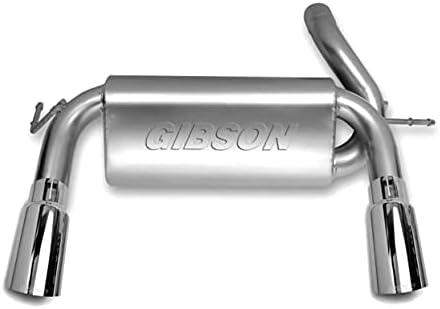

Shop Line Dual Exhaust System 2.5 AL
$178.49 price checked August 2026
Owners of the Bronco can find the best dual outlet exhaust for ford bronco in our detailed comparison.
Dual Exhaust System Components and Materials
Several specific components determine how a dual exhaust system performs regarding flow, sound, and durability. Each part plays a different role in the final result.
Manifold and Header Construction
The manifold or header is the first point of contact for the exhaust gases. Headers are often designed with “mandrel bends,” which are tubes bent using a mandrel tool to maintain a consistent internal diameter throughout the curve. This ensures that the exhaust flow is not restricted by kinks or flattened sections in the pipe, which can occur with standard tubing.
Material Selection: Stainless vs. Aluminized Steel
The material of the piping dictates the lifespan of the system against corrosion. T304 or T409 stainless steel provides high resistance to the extreme heat and moisture found in the exhaust path. Aluminized steel is a more budget-friendly option that uses a coating to resist rust, though it may not withstand the same level of long-term thermal stress as high-grade stainless steel.
Muffler and Resonator Design
Mufflers are the primary tools for noise reduction. They work by forcing exhaust gases into chambers where they expand and collide with baffles. The size of these chambers determines the “tone” of the vehicle. Larger chambers generally produce a deeper, more muted sound, while smaller chambers allow more high-frequency noise to pass through. Resonators are smaller tubes used to cancel out specific “drones” or vibrations caused by the engine’s RPM.
Pipe Diameter and Flow
Pipe diameter is a critical threshold for flow. If the piping is too narrow, it creates high backpressure that limits horsepower. If the piping is too large, it can actually reduce low-end torque because the exhaust gases do not have enough velocity to move efficiently through the large volume. A dual system allows for a balanced diameter that maintains flow without sacrificing torque.
For a clearer understanding of technical details, view our guide to dual exhaust system terms and specs.
What Does a Dual Exhaust System Change in Practice?
In practice, a dual exhaust system changes the vehicle’s performance and acoustic profile in specific measurable ways. The most immediate change is a reduction in exhaust backpressure, which typically allows for a smoother power band and improved high-RPM performance. Because the gases have two paths to exit, the engine can “exhale” more freely, which can lead to a slight increase in horsepower and torque depending on the engine’s displacement.
The acoustic change is also significant. A dual exhaust system often produces a deeper, more resonant sound than a single exhaust because the two pipes can be tuned to different frequencies. However, the difference in sound is most noticeable in high-performance engines or V8 configurations. In a small four-cylinder engine, the change in volume may be less noticeable than the change in tone.
A dual exhaust system does not necessarily improve fuel economy or emissions. While it improves the efficiency of the gas exit, it does not change the fuel combustion process or the chemical composition of the waste gases. Furthermore, a dual exhaust system will not improve the vehicle’s handling or braking capabilities, as these are unrelated to the exhaust flow dynamics.
Who Needs a Dual Exhaust System?
A dual exhaust system is necessary for vehicles with high-displacement engines or high-performance requirements where exhaust gas volume is high. If an engine produces a large volume of exhaust, a single pipe becomes a physical bottleneck that restricts the engine’s ability to reach its full power potential. In these cases, a dual system is a functional requirement to prevent the engine from “choking” on its own waste gases.
A dual exhaust system is not necessary for small-displacement engines or vehicles where performance is not a priority. For a standard commuter car with a small engine, the amount of exhaust produced is low enough that a single pipe can move the gas efficiently without creating significant backpressure. For these drivers, the cost of a dual system provides no measurable performance benefit and is purely an aesthetic or acoustic choice.
Buyers should also consider the physical space under the vehicle before ordering. A dual exhaust system requires double the clearance for piping and mufflers. If the chassis has limited space, a dual system may be impossible to fit without interfering with the drivetrain or fuel system. In such cases, a high-flow single exhaust system is the practical alternative.