Most dual exhaust systems require a pipe diameter between 2.25 inches and 3.0 inches depending on the engine displacement and intended use. You should select a diameter that balances exhaust flow with the specific power output of your vehicle’s engine.
Recommended Pipe Diameter for Dual Exhaust Systems by Use Case
| Use Case | Recommended Pipe Diameter | Why this number |
|---|---|---|
| Daily Driver / Commuter | 2.25 inches to 2.5 inches | Maintains backpressure for low-end torque while improving cabin acoustics. |
| Sport / Performance Tuning | 2.5 inches to 2.75 inches | Optimizes flow for mid-range power bands without causing excessive velocity loss. |
| High-Performance / Turbocharged | 2.75 inches to 3.0 inches | Reduces backpressure significantly to accommodate high-volume exhaust gas flow. |
| Off-Road / Utility | 2.25 inches to 2.5 inches | Prioritizes durability and heat management over maximum flow efficiency. |
Where these choices show up in our reviews
3 reviewed options, $227.99 to $849.99, with the full write-up behind each name.

Rough Country Performance Dual Outlet Exhaust 96020
$549.95 price checked August 2026
Read our full Rough Country Exhaust review
If you are building a heavy-duty rig, see our top-rated truck exhaust options.
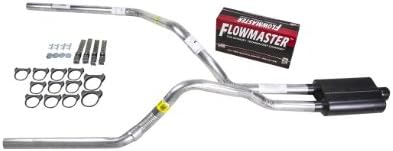
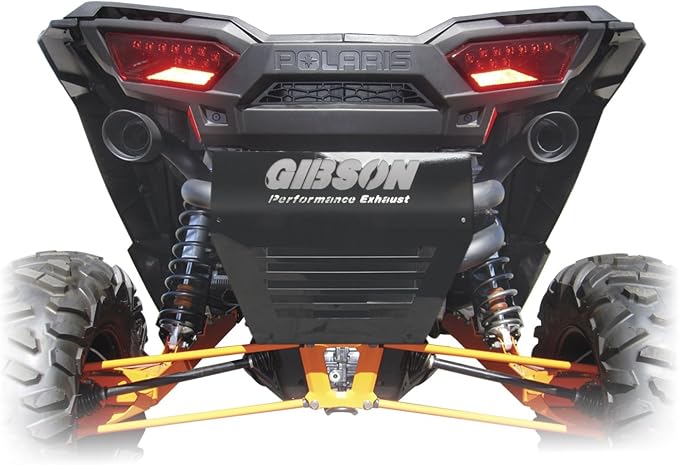
Gibson 98022 Black Ceramic Dual Exhaust System
Understanding the flow is key, so check the ideal muffler chamber count for dual exhaust.
$849.99 price checked August 2026
What happens if you go under or overbuy on Pipe Diameter?
The risks of under-provisioning pipe diameter
Under-provisioning occurs when the pipe diameter is too small for the engine’s displacement or power output. This creates a restriction in the exhaust path, leading to increased backpressure. Higher backpressure can result in higher exhaust gas temperatures (EGTs), which may stress engine components over time. You might also notice a loss in horsepower and a noticeable reduction in throttle response, as the engine struggles to expel spent gases quickly enough.
The costs of over-buying pipe diameter
Over-buying refers to installing a pipe diameter that is unnecessarily large for the engine’s capabilities. While many believe larger is always better, a pipe that is too large causes exhaust gases to lose velocity too quickly. This loss of velocity can lead to a “lazy” engine feel where low-end torque is sacrificed for a negligible gain in high-RPM horsepower. Additionally, larger diameter piping requires more space, which can complicate the layout of the chassis or interfere with other components like suspension and drivetrain parts.
Final aesthetics matter just as much as sound, so view how to choose your exhaust tip diameter.
The mistake most buyers make with Pipe Diameter and what to optimize instead
The diameter versus flow volume mistake
Many buyers assume that a larger pipe diameter is the primary driver of performance. In reality, the pipe diameter is only one component of the total flow dynamics. A large diameter pipe with restrictive internal baffling or sharp, non-mandrel bends can perform worse than a slightly smaller pipe with a smooth, high-flow internal design. You should optimize for flow efficiency rather than just the raw measurement of the diameter.
Optimizing for bend radius and geometry
Instead of focusing solely on the diameter, you should prioritize the quality of the bends and the internal geometry. Mandrel bends maintain the internal diameter of the pipe throughout the curve, preventing the narrowing that occurs with crushed “stub” bends. A system with a 2.5-inch diameter and high-quality mandrel bends will consistently outperform a 2.75-inch system that uses restrictive, poorly formed bends. Smooth transitions ensure that the gas maintains its velocity as it travels toward the dual outlets.
How Pipe Diameter interacts with other deciding specs
The interaction between diameter and material standards
Pipe diameter interacts directly with the material standards of the system, such as aluminized steel or T304 stainless steel. Larger diameter pipes have more surface area, which affects how heat is dissipated. If you choose a larger diameter to increase flow, you must ensure the material can handle the increased heat and maintain structural integrity. For example, T304 stainless steel provides superior corrosion resistance, which is vital when using larger diameter tubes that may be subject to higher thermal expansion.
The relationship between diameter and muffler volume
The effectiveness of the pipe diameter is limited by the volume and design of the mufflers. A high-flow, large-diameter pipe will provide less benefit if it leads into a restrictive, small-chamber muffler. For a dual exhaust system, the muffler’s internal baffle design must be sized to accommodate the flow volume provided by the chosen diameter. If the muffler is the bottleneck, increasing the pipe diameter will result in no measurable performance gains while increasing the cost of the system.
Weight and clearance limitations of larger diameters
Pipe diameter also impacts the physical footprint and weight of the system. Larger diameter piping requires more clearance within the vehicle’s chassis. In some applications, a 3.0-inch system might be physically impossible to fit due to the proximity of the rear axle or suspension components. In these cases, the maximum allowable diameter is dictated by the physical dimensions of the vehicle rather than the performance requirements of the engine. You must confirm your vehicle’s clearance before selecting a diameter that exceeds the available space.