Material Grade refers to the specific chemical composition and structural properties of the metal used to construct a performance exhaust system. Your choice depends on your specific requirements for corrosion resistance, weight, and the level of heat cycles the system will endure during operation.
Which Material Grade Suits Your Needs?
| If this is you | The Material Grade that suits you | Why |
|---|---|---|
| You prioritize long-term durability in a high-salt or coastal environment. | T-304 Stainless Steel | This grade provides the industry standard for corrosion resistance and structural integrity in street applications. |
| You are building a high-performance track vehicle where every gram of weight matters. | Titanium | Titanium offers a high strength-to-weight ratio and superior heat tolerance compared to standard steel. |
| You want a balance of cost-effectiveness and standard durability for a daily driver. | T-304 Stainless Steel | It provides reliable performance and longevity without the high cost of exotic alloys. |
| You are competing in professional-grade racing and need maximum heat dissipation. | Inconel | Inconel maintains structural integrity at extreme temperatures that would cause other metals to soften or fail. |
Reviewed examples from this category
3 reviewed options, $276.99 to $873.05, with the full write-up behind each name.
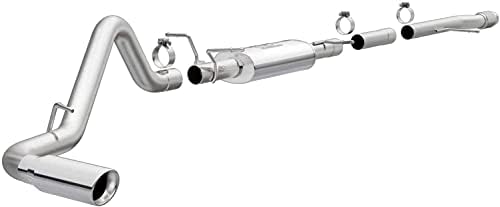
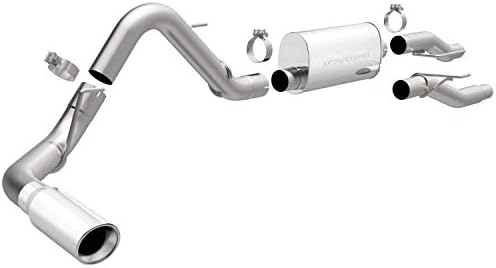
MagnaFlow Performance Exhaust System 16518
Owners of the pony car can explore top-rated performance exhaust systems for Ford Mustang GT to find the perfect fit.
$873.05 price checked August 2026
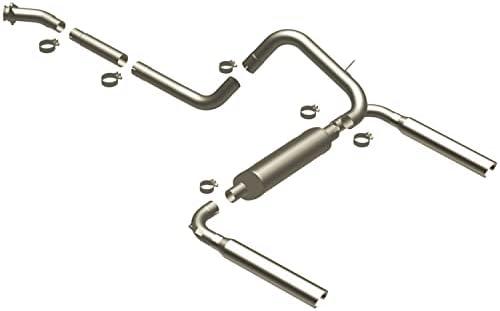
MagnaFlow Cat-Back Performance Exhaust System 16829
$276.99 price checked August 2026
Read our full MagnaFlow 16829 review
You should also consider how decibel levels for performance exhausts are measured before making your final selection.
How Do I Verify the Material Grade Before Ordering?
To verify the material grade, you must check the technical specifications provided by the manufacturer before placing an order. Most reputable manufacturers will list the specific grade of steel or alloy in the “Materials” or “Construction” section of the product description.
Identifying Material via Product Specifications
Look for specific numerical designations such as T-304, T-316, or 304. These numbers identify the chemical makeup of the alloy. If the description only says “Stainless Steel” without a grade, the material may not meet the corrosion resistance standards required for certain climates.
Physical Markers on the Product
Once the system arrives, the material grade is often stamped or etched into the piping or the muffler body. You can also verify the material by checking the welding style; high-grade materials like Titanium often feature distinct, high-quality TIG welds that differ from the bead patterns seen on lower-grade steel.
What Happens if the Material Grade Is Incorrect?
Choosing a material grade that is too low for your environment leads to premature structural failure. If the grade lacks sufficient chromium or nickel content, the exhaust will develop surface pitting and rust, eventually leading to holes in the piping.
Risks of Under-Specifying Corrosion Resistance
In coastal regions or areas where road salt is used, a lower-grade material will degrade rapidly. This failure manifests as “scaling,” where flakes of oxidized metal break away, potentially clogging the exhaust flow or causing the system to leak gases into the engine bay.
Understanding how to choose an exhaust configuration for performance is essential for optimizing your vehicle’s power output.
Weight and Heat Limitations of Standard Steel
If you choose a heavy steel grade for a vehicle where weight is a primary concern, you will notice a decrease in the power-to-weight ratio. Furthermore, if the material cannot handle the heat cycles of a high-output engine, the piping may warp or sag over time, leading to a “drone” or restricted flow.
What Should I Do if I Fall Between Two Material Grades?
When you fall between two material grades, the decision should be based on the specific environment where the vehicle will spend the majority of its time. If the choice is between a standard T-304 and a higher-grade alloy, evaluate your geographical location first.
Prioritizing Environment Over Weight
If you live in a snowy climate, prioritize the material grade that offers the highest corrosion resistance. A heavier, more durable grade is a more practical choice than a lighter material that may fail within one season due to salt exposure.
Prioritizing Performance Over Longevity
If the vehicle is strictly for track use in a controlled environment, you can opt for the lighter material grade. In this scenario, the extreme durability of a higher-grade alloy is less critical than the weight savings provided by a lighter construction.
The Role of Professional Installation
Regardless of the material grade you select, the fitting of a performance exhaust system is a job for a qualified installer wherever local rules require one. A professional can ensure the welds are secure and the hangers are positioned to prevent the material from stressing or cracking under heat.