Core Width measures the horizontal distance across the radiator’s cooling surface, typically expressed in inches (in.). Your specific vehicle’s engine bay dimensions and the space available between the frame rails determine which core width is compatible with your setup.
Which Core Width suits my vehicle?
| If this is you | The Core Width that suits you | Why |
|---|---|---|
| Replacing a standard factory unit in a compact car | The exact width of the original unit | Standard mounting points are designed for specific dimensions to ensure the unit clears the front bumper and engine accessories. |
| Upgrading a performance vehicle with a high-output engine | A wider core than the original (if space allows) | A wider core increases the total surface area of the cooling fins, allowing for more efficient heat exchange for higher-horsepower engines. |
| Installing a radiator in a custom-built truck or wide-body vehicle | The maximum width the frame rails allow | Custom builds often have more clearance, allowing for a larger core to maximize cooling capacity without physical interference. |
| Fitting a radiator into a tight, crowded engine bay | A narrower core than the standard | In some older designs or specific layouts, a narrower core is necessary to clear the AC compressor or the radiator fan shroud. |
Complete Radiators we have reviewed in detail
Prices across these 3 run from $149 to $250.90; each one has a full review here.
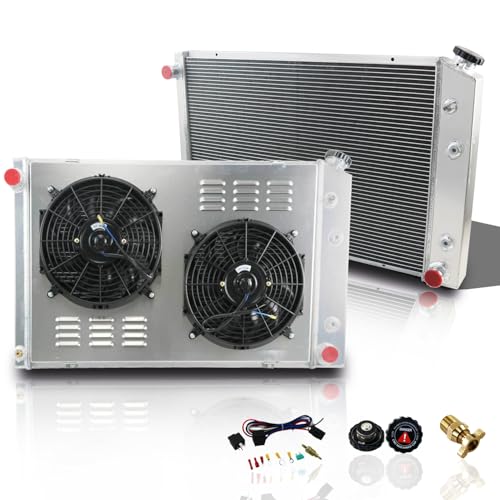
4 Row Aluminum Radiator for GMC Chevy C/K Jimmy
$250.90 price checked August 2026
Read our full GMC Chevy Radiator review
If you own a truck from that brand, compare complete radiators for Dodge Dakota and Ram to find the best fit.

ALLOYWORKS 3 Row All Aluminum Radiator
$149 price checked August 2026
Read our full ALLOYWORKS 3 Row Radiator review
High-performance engines often require more surface area, so find the best 3 row all aluminum radiator for your specific setup.

How do I measure my required Core Width?
To determine the correct Core Width, you must measure the physical clearance available in the engine bay. You should measure the distance between the two mounting points on the radiator support or frame rails where the radiator will be bolted.
While width is vital for clearance, you should also learn how to choose core height for your cooling system.
Locating the measurement points
Identify the mounting brackets on the vehicle’s chassis. Measure the horizontal distance between the center of the left mounting hole and the center of the right mounting hole. This measurement should be taken in inches (in.).
Checking for obstruction clearance
Once you have the mounting distance, measure the distance from the radiator’s side edges to the nearest obstacles, such as the inner fender wells or the AC lines. The Core Width of the new unit must be smaller than the total available space to allow for a gap between the radiator and the bodywork.
Finding the width on the product
The Core Width is usually listed in the technical specifications of the complete radiator. Look for the “Core Width” or “Width” value, which will be provided in inches (in.). If the measurement is only provided in millimeters (mm), divide the number by 25.4 to convert it to inches (in.).
What happens if the Core Width is the wrong size?
Selecting a Core Width that is too large or too small leads to specific mechanical and thermal failures during operation.
Risks of a Core Width that is too wide
If the Core Width exceeds the available space, the radiator will not seat flush against the mounting brackets. This can cause the unit to sit at an angle, leading to uneven pressure across the cooling fins and potential leaks at the hose connections. In severe cases, a wide radiator may press against the front bumper or the cooling fan, causing structural damage or preventing the fan from spinning.
Proper flow depends on the plumbing, so view our guide on hose connection diameter to ensure a perfect fit.
Risks of a Core Width that is too narrow
A Core Width that is significantly narrower than the original unit may reduce the total surface area available for cooling. If the engine produces high heat, a narrow core may fail to dissipate enough energy, leading to rapid coolant temperature spikes. This is especially common when replacing a large factory radiator with a smaller, “universal” fitment unit that lacks the necessary surface area for the engine’s output.
What do I do if I fall between two Core Width sizes?
If your measurements indicate that you fall between two standard Core Width options, you must prioritize physical clearance over cooling surface area. It is better to choose the smaller of the two available sizes if the larger one risks touching the engine block or the AC compressor.
Why you should choose the smaller size
A radiator that is even slightly too wide may be impossible to install or may interfere with the fan shroud. If the radiator cannot sit flat against the mounting points, the mounting brackets may bend or the radiator may vibrate excessively. Choosing the smaller size ensures a secure fit, even if it means sacrificing a small amount of cooling surface.
Consulting a qualified installer
Because mounting points and clearances vary by vehicle year and trim, a professional installer can confirm the clearance before you place an order. They can verify if a specific Core Width will clear the necessary components and ensure the mounting hardware aligns with the chassis.