Hose Connection Diameter refers to the internal diameter of the ports where the upper and lower radiator hoses attach to the complete radiator. Your specific vehicle’s cooling system design determines which diameter you must select to ensure a secure, leak-free connection.
Which Hose Connection Diameter Suits Your Situation?
| If this is you | The Hose Connection Diameter that suits you | Why |
|---|---|---|
| You are replacing a standard factory radiator on a common passenger car. | The diameter matching your existing radiator’s ports. | Most mass-market vehicles use standardized hose sizes to ensure compatibility with stock cooling components. |
| You are installing a high-performance racing radiator. | The diameter specified by the cooling system’s flow requirements. | Performance upgrades often require larger diameters to increase coolant volume and reduce flow resistance. |
| You are performing a custom engine swap or build. | The diameter of your chosen custom hose fittings. | Custom builds may use non-standard diameters to accommodate specific plumbing layouts or high-pressure requirements. |
| You are upgrading to a heavy-duty truck or diesel cooling system. | The larger diameter specified by the heavy-duty cooling requirements. | Diesel engines and heavy-duty applications require higher flow rates, often necessitating larger hose connections. |
Products in this category with a full review here
3 reviewed options, $136.88 to $250.90, with the full write-up behind each name.

3 Row Aluminum Radiator GM Chevrolet Buick GMC
$136.88 price checked August 2026
Read our full 3 Row Aluminum Radiator review
If you own a 4×4, you should see our top-rated Jeep Wrangler aluminum options.
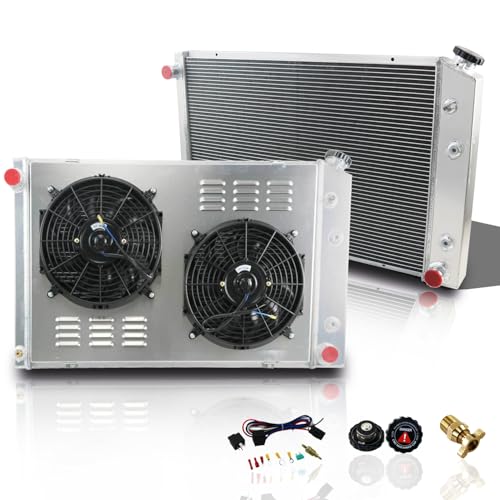

ALLOYWORKS 3 Row All Aluminum Radiator
Truck owners can find the best radiator for chevrolet and gmc pickup trucks in our comparison.
$149 price checked August 2026
How Do I Measure My Required Hose Connection Diameter?
To find the correct Hose Connection Diameter, you must measure the internal opening of the radiator ports on your current unit or the diameter of the hose ends you intend to use.
Tools for Accurate Measurement
Use a digital caliper or a high-quality metal ruler to ensure accuracy. Digital calipers are preferred because they provide a precise reading in inches or millimeters, allowing you to confirm the internal diameter of the radiator’s inlet and outlet ports.
Understanding the physical dimensions is key, so learn about selecting the ideal core height.
Where to Locate the Measurement Points
Measure the internal diameter of the actual port on the radiator. Do not measure the outer diameter of the housing, as the thickness of the material will give you an incorrect value. If you are replacing a complete radiator, measure the diameter of the hose that currently connects to the radiator to ensure the new unit accepts that specific hose.
Reading Manufacturer Specifications
If you cannot physically measure the current unit, consult the vehicle’s service manual or the technical specifications of the original equipment manufacturer (OEM). These documents usually list the required hose sizes in inches. Note that some manufacturers may list the outer diameter of the connection; if this is the case, you must subtract the wall thickness of the radiator material to find the internal Hose Connection Diameter.
What Happens if the Hose Connection Diameter is Incorrect?
An incorrect Hose Connection Diameter creates a physical mismatch between the radiator and the cooling hoses, leading to mechanical failures or coolant loss.
Risks of a Hose Connection Diameter That is Too Small
If the Hose Connection Diameter on the radiator is smaller than the hose, the hose will not seat properly against the port. This creates a gap where coolant can spray out under pressure, leading to a rapid loss of coolant and potential engine overheating. In some cases, the hose may be forced onto a smaller port, which can cause the hose to bulge or tear over time due to the excessive internal pressure.
Risks of a Hose Connection Diameter That is Too Large
If the Hose Connection Diameter on the radiator is larger than the hose, the connection will be loose and unstable. A loose hose can vibrate and move during operation, eventually causing the hose to slip off the port entirely. This results in an immediate loss of coolant and a failure of the cooling system. Even if the hose stays on, the lack of a tight seal allows for “weeping” or slow leaks at the connection point.
You should also consider how choosing the correct core width impacts your cooling capacity.
What Should I Do if My Measurement Falls Between Two Sizes?
If your measurement falls between two standard Hose Connection Diameter sizes, you should prioritize a secure, leak-proof seal over a perfect fit.
Choosing the Smaller Diameter Option
If your measurement is slightly larger than the available options, you can often use a smaller Hose Connection Diameter by utilizing a reducer fitting. A reducer is a metal adapter that allows a larger hose to connect to a smaller port. This is a common solution in custom builds where the radiator port is smaller than the desired hose size.
Choosing the Larger Diameter Option
If your measurement is slightly smaller than the available options, you can use a larger Hose Connection Diameter by employing a hose clamp and a specialized adapter. However, this requires ensuring the adapter provides enough surface area to grip the hose securely. If the gap is too large, even a clamp may not prevent the hose from slipping, making the smaller diameter choice with a reducer the more reliable path.
When to Consult a Professional Installer
If the discrepancy between your required size and the available Hose Connection Diameter is significant, you should consult a professional installer. A qualified technician can determine if custom fabrication of the hose ends or the use of specialized high-pressure adapters is necessary to ensure the cooling system remains sealed under operating temperatures.