There are three primary types of wheel hubs defined by their mechanical construction and the specific vehicle systems they support. The core distinction between these types is whether the hub is a simple mechanical mounting point, a complex assembly containing high-load bearings, or an integrated electronic component designed to communicate with a vehicle’s stability systems. Choosing the correct type depends entirely on your vehicle’s hub bolt pattern, the presence of an Anti-lock Braking System (ABS), and whether you require a standard replacement or a high-performance upgrade.
What are Standard Wheel Hubs?
Standard wheel hubs serve as the basic mounting point for the wheel and braking system on the vehicle’s axle. These units are defined by their simple mechanical design, focusing on providing a secure seat for the wheel and a stable platform for the brake calipers. They are intended for vehicles that do not require complex electronic feedback or specialized bearing configurations.
You should prioritize a standard wheel hub if you are performing a basic repair on a vehicle without electronic stability controls or if you are working on a light-duty application where high-speed heat dissipation is not a primary concern. These hubs offer the most straightforward installation because they lack complex internal sensors.
The trade-off for this simplicity is a lack of advanced features. Standard hubs do not provide the vibration dampening of high-performance bearing sets, nor do they support the data transmission required for modern safety systems. In terms of cost, these are the most affordable options and represent the entry-level tier for hub replacements.
Where these choices show up in our reviews
Prices across these 3 run from $145.78 to $169.95; each one has a full review here.

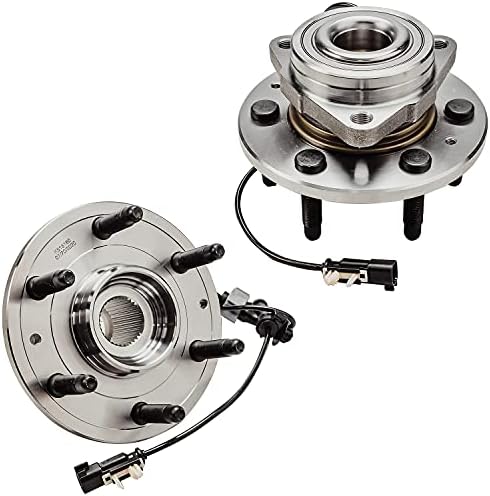
Detroit Axle 4WD Front Wheel Bearing Hubs
$154.60 price checked August 2026
Read our full Front Wheel Hubs review
For a foundational overview of the mechanics, see how a wheel hub works.
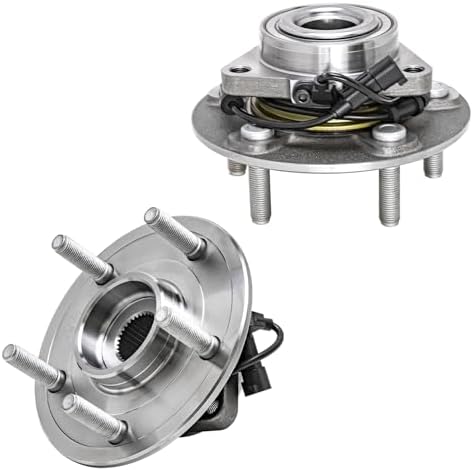
Detroit Axle Front Wheel Bearing Hubs Ram 1500
$169.95 price checked August 2026
Read our full Ram 1500 Wheel Hubs review
To understand the technical data, visit our guide to wheel hub specs.
What are Wheel Hub Bearing Assemblies?
Wheel hub bearing assemblies are the most common type of hub found on modern passenger cars and light trucks. These assemblies integrate the hub and the heavy-duty bearings into a single, pre-pressed unit. The defining characteristic of this type is the inclusion of precision-engineered bearings, often manufactured to meet the standards of industry leaders like Timken or SKF.
These assemblies are for the owner who needs a reliable, high-durability replacement that ensures smooth rotation under load. Because the bearings are pressed into the hub at the factory, these units provide a more consistent and reliable fit than hubs where the bearings are pressed in manually by a technician. This reduces the risk of bearing preload variance, which can cause wheel wobble or premature noise.
The main advantage of a bearing assembly is the reduction in labor time and the increased reliability of the press-fit. However, these units are more expensive than standard hubs due to the precision required in the bearing manufacturing process. You will find these in the mid-to-high price range relative to other hub types.
What are ABS Wheel Hubs?
ABS wheel hubs are specialized components that include integrated sensors or tone rings to communicate with the vehicle’s Anti-lock Braking System. These hubs are defined by their ability to provide electronic feedback, allowing the vehicle’s computer to monitor wheel speed and apply traction control or stability interventions.
You need an ABS wheel hub if your vehicle is equipped with electronic stability control or ABS. These hubs are designed for modern safety requirements where the electronic system must distinguish between a locked wheel and a spinning wheel. Without the correct ABS sensor type—whether active or passive—the vehicle will trigger a dashboard warning and may disable traction control.
The primary advantage of these hubs is the preservation of the vehicle’s safety systems. The compromise is a higher complexity in the part’s construction and a higher price point. These are generally the most expensive hub types because they require precise tolerances to ensure the sensor stays perfectly aligned with the wheel’s rotation.
Comparison of Wheel Hub Types
| Hub Type | Best-Fit Buyer | Main Advantage | Main Compromise |
|---|---|---|---|
| Standard Hub | Light-duty/Non-ABS vehicles | Lowest cost and simplicity | No electronic sensor support |
| Bearing Assembly | Standard passenger cars/trucks | Factory-pressed reliability | Higher cost than basic hubs |
| ABS Hub | Modern vehicles with stability control | Maintains safety systems | Highest price and complexity |
How to Choose the Correct Hub Type?
To determine which wheel hub type you need, you must first verify the presence of an ABS sensor on your current hub. If your hub has a wire leading to a sensor or a notched tone ring, you must select an ABS wheel hub to ensure your safety systems continue to function.
Next, check if your vehicle requires a pre-pressed bearing. If your current hub is a single piece of metal that houses the bearings, a wheel hub bearing assembly is the standard choice for a reliable repair. If you are working on a vehicle where the hub and bearings are separate components, you may only need a standard hub.
Finally, confirm your hub bolt pattern and hub bore diameter. A hub with a 6×139.7 bolt pattern will not mount to an axle requiring a different configuration. Before ordering, you must confirm that the hub’s physical dimensions and sensor types match the OEM specifications to avoid a hub bolt pattern mismatch or an ABS signal incompatibility.
Reviewed by the Carworship editorial team. Carworship writes these guides from the 200 most-reviewed wheel hub listings in our retail dataset, not from manufacturer copy.