When researching alternator specifications, it is helpful to distinguish between load-bearing data and marketing vocabulary. Terms like “heavy-duty,” “high-performance,” and “premium” are subjective descriptors that lack a standardized measurement. To make an informed decision, you should focus on the technical specifications: amperage ratings, voltage outputs, and physical mounting configurations. These numbers dictate whether the unit will power your accessories or fail under load. Ignore the adjectives and look for the specific numbers that define the alternator’s capacity and compatibility with your vehicle’s electrical system.
Alternator Electrical Capacity and Output
Alternator electrical capacity determines how much power the unit can generate to run your vehicle’s systems and accessories.
- Amperage (Amps) – This measures the total current the alternator can produce; a higher number allows you to run more power-hungry accessories like winches or auxiliary lights.
- Voltage (V) – Most modern vehicles operate on a 12V or 24V system; you must match the voltage of your vehicle’s battery exactly.
- Output Rating – This is the maximum sustained current the unit can provide; a rating that matches or slightly exceeds your vehicle’s factory requirements is the standard for replacement.
- Charging Rate – This describes how quickly the alternator can replenish the battery’s charge; a higher rate is beneficial for vehicles with large battery banks.
- Duty Cycle – This refers to the amount of time an alternator can run at full load; high-output units are designed for a 100% duty cycle to prevent overheating during continuous use.
Where these choices show up in our reviews
These 3 have their own full review on this site, and run from $102.44 to $179.39.
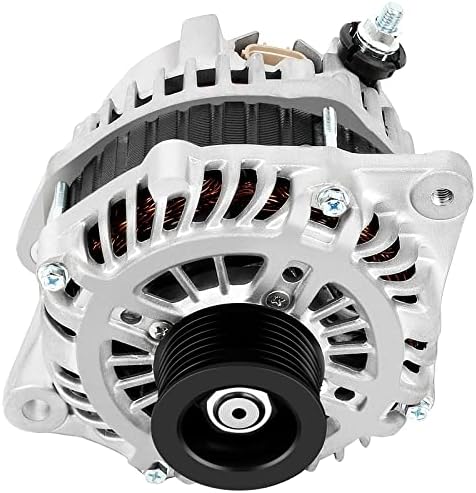
SCITOO 11341 Alternator for Nissan Altima Maxima Murano
$102.44 price checked August 2026
Read our full SCITOO 11341 Alternator review
If you own a German luxury vehicle, see how to pick the best alternator for mercedes-benz.

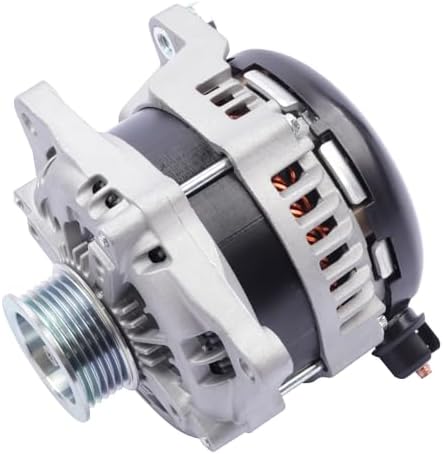
105 Amp Alternator for Acura CSX CR-V TSX
$111.99 price checked August 2026
Read our full 105 Amp Alternator review
Owners of these SUVs can find the best replacement alternator for toyota highlander in our detailed comparison.
Alternator Physical and Mechanical Specs
Alternator physical specs ensure the unit fits in the engine bay and connects correctly to the engine’s belt system.
You can also learn more about the different types of alternators available on the market today.
- Pulley Diameter – This is the width of the alternator’s rotating wheel; a diameter that matches the original equipment manufacturer (OEM) specification ensures the belt does not slip or wear prematurely.
- Mounting Bracket – This is the physical frame that bolts the unit to the engine; you must confirm the bolt pattern and orientation match your specific vehicle.
- Housing Material – This refers to the metal casing, often aluminum or steel; aluminum is common for heat dissipation, while steel is often used for heavy-duty durability.
- Cooling Fins – These are the ridges on the alternator housing; more prominent fins help dissipate heat during high-output operations.
- Weight (lbs/kg) – The physical weight of the unit; while heavy-duty units are often heavier, you must ensure the mounting points can support the weight.
Alternator Connection and Fitment
Alternator connection and fitment terms describe how the unit plugs into your vehicle’s wiring and drivetrain.
- Connector Pin Configuration – This describes the layout of the electrical plug; the pins must align perfectly with your vehicle’s wiring harness to prevent shorts.
- Single vs. Dual Pin Connectors – This refers to the number of primary connection points; you must match the configuration of your existing wiring harness.
- Internal vs. External Voltage Regulation – Internal regulation keeps the voltage steady within the unit; external regulation uses a separate component to manage output.
- Belt Drive Type – This indicates how the alternator is turned, such as a serpentine belt or a V-belt; you must match the drive type of your engine.
- OEM (Original Equipment Manufacturer) – This refers to the original part made by the vehicle manufacturer; it serves as the baseline for noise levels and amperage curves.
- High-Output (Heavy Duty) – This refers to an alternator designed to exceed the factory amperage; these are used when the vehicle’s original electrical demand is insufficient.
Commonly Confused Alternator Terms
Several terms in the alternator category are often confused by shoppers, but they represent different electrical and mechanical concepts.
Amperage vs. Voltage
Amperage refers to the volume of electricity flowing through the wires, while voltage refers to the electrical pressure. You need the correct voltage (e.g., 12V) for safety, but you choose the amperage based on how many accessories you plan to run.
Alternator vs. Starter
An alternator provides power to the vehicle while the engine is running, whereas a starter motor provides a high-current burst of energy only to turn the engine over initially. They are separate components with different roles in the electrical system.
Remanufactured vs. New
A new alternator is built from raw components, while a remanufactured alternator has been disassembled, cleaned, and rebuilt to original specifications. Remanufactured units often offer a lower price point while maintaining similar performance to new units.