A dual mass flywheel (DMF) is a mechanical component that sits between an internal combustion engine and the transmission to dampen vibrations and smooth out the power delivery to the wheels. It functions by isolating the engine’s crankshaft from the clutch’s input, allowing the two components to rotate with slight independence from one another.
The problem a dual mass flywheel solves is the inherent imbalance of an engine’s power stroke. In a standard engine, the pistons move up and down, creating significant torsional vibration—a twisting force that travels through the crankshaft. Without a way to absorb this energy, these vibrations can cause premature wear on the gearbox, transmit harshness to the cabin, and lead to a jerky feeling during gear changes. A dual mass flywheel acts as a mechanical shock absorber for the drivetrain.
How does a dual mass flywheel work?
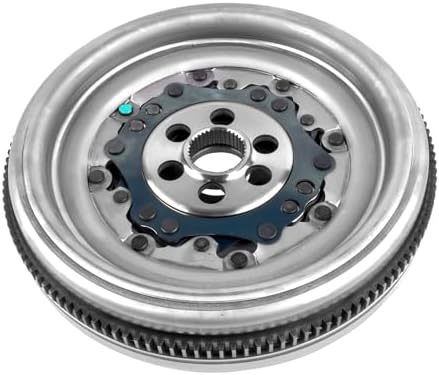
A dual mass flywheel works by allowing the flywheel to consist of two separate discs joined by internal springs or dampers.
- The inner disc is bolted directly to the engine’s crankshaft. It absorbs the primary vibrations and torque spikes from the combustion process.
- The outer disc is the surface where the clutch engages. It provides a stable, smooth surface for the clutch plate to grab onto.
- The internal damping system, usually consisting of heavy-duty springs or hydraulic dampers, allows these two discs to move slightly against each other.
- When the engine fires, the inner disc twists slightly to soak up the vibration.
- The outer disc remains relatively stable, ensuring that the power sent to the transmission is steady and linear.
- During a clutch release, the internal springs compress and expand, absorbing the sudden “jerk” of torque, which prevents the shock from reaching the gearbox.
Dual Mass Flywheels we have reviewed in detail
Prices across these 3 run from $219 to $493.88; each one has a full review here.


Schaeffler LuK DMF062 Dual Mass Flywheel
$226.29 price checked August 2026
If you own a Jetta, see our guide to the best dual mass flywheel for VW Jetta for specific recommendations.
What parts of a dual mass flywheel matter to a buyer?
Several specific engineering components determine how a dual mass flywheel handles stress and how long it lasts before requiring replacement.
Spring and Damper Architecture
The damping mechanism is the heart of the unit. Some designs use a series of coil springs, while others use a friction-based or hydraulic damping system. The spring rate determines how much “give” the flywheel has; a softer spring provides a smoother ride but may be less durable under high-torque conditions, while a stiffer setup handles more power but may feel firmer during acceleration.
Material Composition
The material of the outer friction surface and the internal discs dictates heat management. High-quality units use specific steel alloys to ensure the material doesn’t warp under the extreme heat generated during heavy clutch use. The manufacturing process ensures that the mass distribution is balanced to prevent harmonic resonance, which is a failure mode where specific engine speeds cause the flywheel to vibrate excessively.
You can learn common dual mass flywheel terms and specs to better understand the technical data.
Pilot Journal Diameter
The pilot journal is the small protruding shaft in the center of the flywheel that the transmission’s input shaft slides onto. You must confirm the pilot journal diameter matches your transmission’s requirements. A mismatch here means the clutch input shaft will not align with the flywheel center, making it impossible to install the transmission correctly.
What does a dual mass flywheel change in practice?
Having a dual mass flywheel changes the tactile experience of driving by prioritizing smoothness over raw, direct engine connection.
Ride Quality and NVH
In a vehicle equipped with a dual mass flywheel, you will notice a significant reduction in Noise, Vibration, and Harshness (NVH). This is most noticeable at idle and during low-RPM acceleration, where the flywheel absorbs the “thrum” of the engine. It makes the car feel more refined and less like a vibrating machine.
Gear Shift Feel
The dual mass flywheel makes gear changes feel more deliberate and less “notchy.” Because the internal springs absorb the initial shock of the clutch engaging, the transition between gears is smoother. However, some drivers who prefer a very “connected” feel—where they can feel every nuance of the engine’s power—might find the damping makes the engagement feel slightly less immediate.
Wear and Durability
A dual mass flywheel is a wear item with a finite lifespan. Because it contains moving internal parts (the springs and dampers), it can eventually wear out or lose its damping properties. Once the internal springs fatigue, the flywheel may begin to produce a rattling noise or cause the car to vibrate more than it did when new. Unlike a solid flywheel, which can often be resurfaced, a failed dual mass flywheel usually requires a complete replacement.
Who needs a dual mass flywheel?
Determining whether you need a dual mass flywheel depends entirely on the engine type and your intended use for the vehicle.
Passenger Cars and SUVs
If you drive a modern front-wheel-drive or rear-wheel-drive passenger car, you likely already have a dual mass flywheel. These vehicles prioritize cabin comfort and smooth power delivery. If you are replacing a failed unit in a standard commuter vehicle, a dual mass flywheel is the correct replacement to maintain the factory’s intended ride quality.
Diesel Engines
Diesel engines produce high-torque, low-RPM power and have significant inherent vibration. In these applications, a dual mass flywheel is almost always required to protect the transmission from the heavy pulses of the diesel combustion cycle. If you are performing a diesel engine swap or repair, a DMF is a standard requirement for drivability.
When to avoid a dual mass flywheel
You do not need a dual mass flywheel—and may actually want to avoid one—if you are building a high-performance track car or a heavy-duty towing rig where maximum durability is the priority. In these cases, a solid flywheel or a high-performance single-mass flywheel is often preferred because they have no internal moving parts to fail under extreme heat or heavy load. For these applications, the trade-off is a harsher ride and more vibration in exchange for a component that can withstand more abuse without internal fatigue.